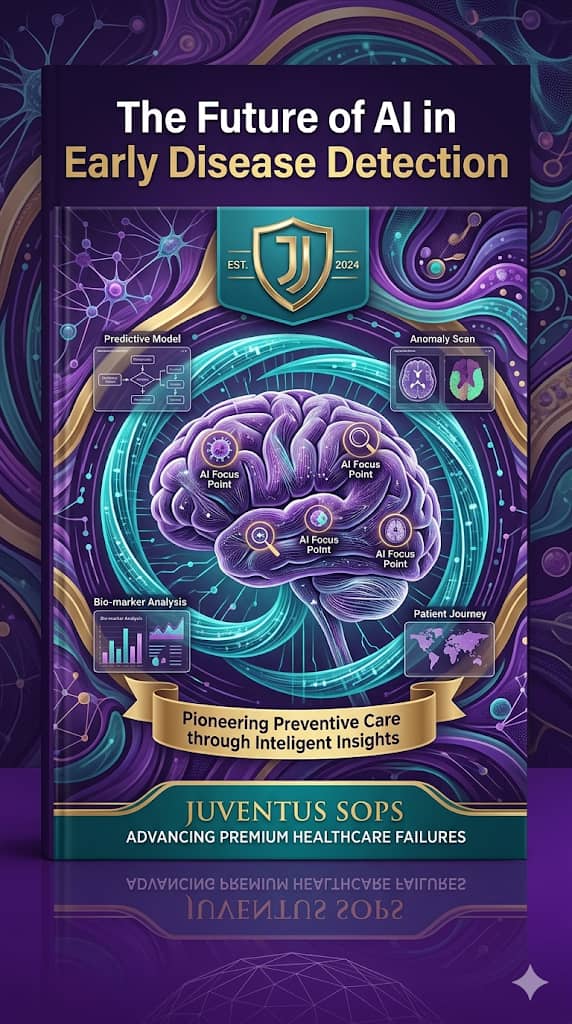
The Future of AI in Early Disease Detection

For most of modern medical history, disease has been treated after it appears, often when symptoms become visible and the condition has already begun to progress. But a quiet shift is happening in healthcare, one that moves medicine away from reaction and toward anticipation.
The Future of AI in Early Disease Detection explores how artificial intelligence is transforming the way illnesses are identified, long before they become severe or life threatening. By analyzing subtle patterns in medical imaging, genetic data, lifestyle information, and real time health signals, AI systems are beginning to recognize the earliest warning signs of diseases such as cancer, heart conditions, neurological disorders, and metabolic illnesses.
This ebook takes readers into a future where detection is no longer delayed by human limitations or fragmented data. Instead, intelligent systems work alongside doctors to highlight risks earlier, improve screening accuracy, and support faster intervention when time matters most.
But beyond the technology lies a deeply human impact. Early detection is not just a medical advancement. It is the difference between fear and reassurance, between prolonged suffering and timely treatment, between uncertainty and hope. This book shows how AI is helping healthcare professionals reach patients sooner, when outcomes are more positive and treatment is more effective.
Written in a clear and engaging tone, this guide is designed for healthcare professionals, innovators, students, and anyone interested in how medicine is evolving in the age of intelligence. It makes complex ideas easy to understand while keeping the focus on what truly matters, the people whose lives can be changed by earlier answers.
The future of healthcare is moving toward a world where diseases are not only treated but anticipated. A world where technology helps see what the human eye cannot yet see, and where early detection becomes one of the most powerful tools in saving lives.