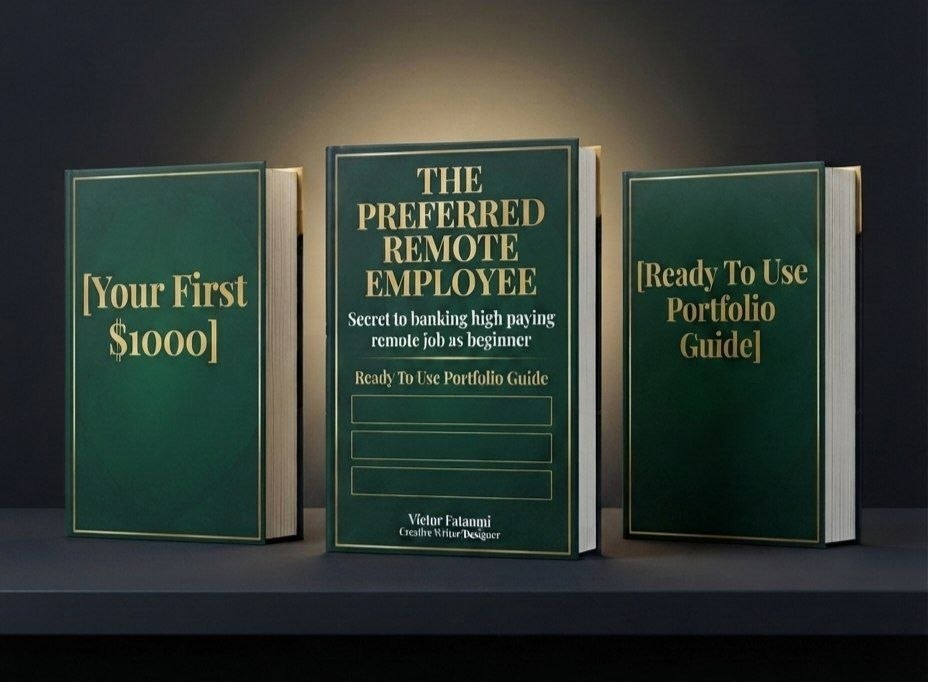
THE PREFERRED REMOTE EMPLOYEE
Christy A. Short PDF Guide Is Helping Unemployed Graduates Land High-Paying Remote Jobs — Even With Zero Experience
You wake up and check your phone before you even sit up.No new messages from the last three job applications. Not even a rejection this time. Just silence.
You made First Class, or a strong 2:1. You did everything right.And yet here you are, still asking your parents for transport money at 26.
Maybe I studied the wrong course, you think. Maybe I should have left the country by now.
You've applied to over a hundred jobs. Some you never heard back from. Some wanted "3-5 years experience" for an entry-level role. One even asked you to pay a "processing fee."
Your friends are posting "remote job" screenshots, dollar payments, laptop-on-the-beach photos. You wonder what they know that you don't.
You've tried the things everyone tells you to try — CV templates, cover letter formats, "just apply to everything." None of it has moved the needle.
It's not that you're lazy. It's that nobody has ever shown you what actually gets you picked, out of five hundred applicants, for a role that pays in dollars.
So drop everything you're doing right now, and read every word of what's below.Because I'm about to share a simple, three-part system that changed things for me — and that I've now put in writing so you can use it too.
This isn't some overnight trick I stumbled on in a Telegram group. It's the same three-part approach that recruiters at remote-first companies quietly expect from candidates — most job seekers just never get shown it directly.
Hi, I'm Christianah Akinlayo,
First thing you should know about me: I'm not a career coach with a fancy certificate. I'm a creative writer and designer who spent a long stretch broke, underpaid, and overlooked — before I figured out what actually gets a beginner hired remotely, fast.
I put what worked into a short, no-fluff guide. This page tells you exactly what's in it, and why it might be worth your time.
It started after I finished a big freelance contract and had nothing lined up next. No pipeline, no leads, just an empty calendar and rent due.
I told myself it was temporary. It wasn't. Weeks turned into months.My confidence took the biggest hit. I stopped mentioning "work" when people asked what I was up to. I'd just say "still figuring things out."
The breaking point came the day I had to turn down a friend's dinner invite because I genuinely could not afford the transport there and back.
I called my aunt that night, mostly just to vent. She listened, then said something I still repeat to myself: "Nobody is hiring your certificate. They're hiring proof that you can already do the job.That line sat with me for weeks.
Before that, I'd tried almost everything people recommend:
Affiliate marketing — spent on ads, made almost nothing back.
Amazon KDP — published two books, sold a handful of copies total.
Generic digital marketing gigs — undercut constantly by cheaper bidders.
Dropshipping — burned through savings before a single reliable sale.
Every one of them asked me to compete on price, speed, or luck. None of them asked me to build proof of skill — which, it turns out, is the one thing that actually gets a beginner hired for a well-paying remote role.
The shift happened almost by accident. I was in a group chat where someone was breaking down, in plain terms, why some candidates with almost no experience were getting picked over people with years of it.
It came down to how they presented what they could do — not how long they'd been doing it.
"It sounds too simple to matter," I remember thinking. I'd expected something more complicated, something that required money I didn't have.
I tried it anyway, mostly out of options. The first couple of days, nothing. No replies. I almost gave up and went back to blasting applications the old way.
Then, on day five, I got a reply from a company I hadn't even followed up with. They wanted a short call. That call turned into my first proper remote contract in months.
When I told my partner, they didn't believe it at first. "Wait — this one actually pays? In dollars?" They'd watched me try four different things that year. This was the first one that produced a real, signed contract within days, not months.
I've since shared the core of this approach with a small number of people directly. Not all of them had dramatic five-day turnarounds — some took longer, some moved faster — but the common thread was the same: once they stopped applying like everyone else and started presenting proof of skill the way employers actually look for it, responses picked up.
I can't have this conversation one-on-one with everyone who asks, so I put the whole approach — what to get right from day one, the mistake that quietly costs beginners the best roles, and how to actually keep a contract once you land it — into one short, direct guide.
Introducing...
THE PREFERRED REMOTE EMPLOYEE
A Secret to Banking a High-Paying Remote Job as a Beginner
Inside this short guide, you'll discover:
The three things you must get right from day one as a beginner trying to break into remote work — skip these and every application struggles from the start.— Pg. 4
The single mistake that quietly disqualifies capable beginners from high-paying roles, without them ever knowing why.— Pg. 9
How to actually keep the contract once you land it, so your first win isn't your last.— Pg. 14
And the best part? You don't need a certification, years of "experience," or expensive courses to start. It's the same straightforward approach that worked for me — no gimmicks, no shortcuts that put you at risk.
Just so you know... putting this guide together properly cost me over ₦50,000.
Time spent researching what remote employers actually screen for
Editing and proofreading passes
Cover design and layout
Testing the approach with real applications before writing it down
Hosting and delivery setup
I'm not going to charge you ₦50,000 for it. I won't even charge you ₦25,000. Not even ₦10,000. In fact, you won't pay anywhere close to ₦15,800.
Grab it for less than ₦3,000 if you are paying NOW