Downloadable
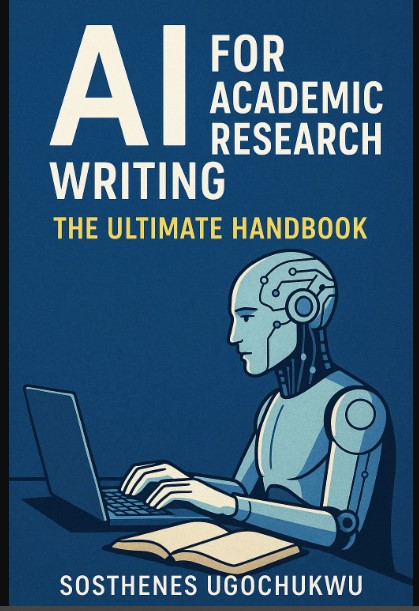
AI for Academic Research Writing - The Ultimate Handbook
(0 Ratings)
1
$3.69$7.37
AI for Academic Research Writing: The Ultimate Handbook is a comprehensive, student-friendly guide that equips researchers, students, and academics with the knowledge and tools needed to effectively integrate Artificial Intelligence into their academic writing and research processes.
The book is divided into clearly structured sections, each building practical skills and awareness for using AI responsibly and effectively in scholarly work.
What the Book Covers:
🔹 Section One: Introduction
- Introduces the concept of AI prompting and its transformative impact on research writing.
- Discusses the fundamentals of prompt engineering, ethical concerns, and the growing importance of AI tools in academia.
- Highlights the author’s journey and expertise in using AI for research assistance.
🔹 Section Two: AI Prompts for Research Writing
- Provides 40+ expertly crafted AI prompts tailored to every major section of an academic research paper—from the background and problem statement to data analysis and conclusion.
- Guides the reader through generating ideas, analyzing data, designing methodology, drafting questionnaires, and interpreting statistical results using AI tools.
🔹 Section Three: AI Tools for Academic Research
- Introduces a wide array of AI tools across multiple categories: writing/editing, literature review, data analysis, presentation, programming, and more.
- Offers practical recommendations for choosing the right tools to support various phases of academic work.
🔹 Section Four: Ethical Considerations
- Discusses the ethical use of AI in academia, including transparency, authorship, citation practices, and how to avoid academic misconduct.
🔹 Section Five: Limitations of AI in Research
- Highlights the current constraints and challenges of using AI in scholarly research, such as hallucinations, lack of context, and over-reliance.
🔹 Section Six: Humanizing AI Content
- Explains how to make AI-generated content sound more human and natural to avoid detection by AI detectors (like Turnitin or GPTZero).
- Provides manual techniques, AI tools for rewriting, and best practices to ensure originality and academic authenticity.
🔹 Section Seven: Case Studies
- Presents real-life examples of students, researchers, and professionals who successfully used AI tools to enhance their academic outcomes.
- Covers use cases like literature reviews, hypothesis generation, thesis writing, coding, and visualization.
🔹 Section Eight: Conclusion
- Encourages readers to see AI as a strategic partner in research—not a replacement for human intellect.
- Reinforces the importance of ethical usage, critical thinking, and continued learning in this AI-augmented academic world.
Who This Book Is For:
- Undergraduate and postgraduate students
- Academic researchers and thesis writers
- Educators and supervisors seeking to understand AI in academia
- Early-career professionals aiming to enhance their research and writing productivity
Key Takeaway
This handbook is your practical, ethical, and actionable companion to mastering AI tools in academic research writing. Whether you're struggling with literature reviews, data interpretation, or polishing your thesis, this book empowers you to work smarter—not harder—in the AI-driven academic era.