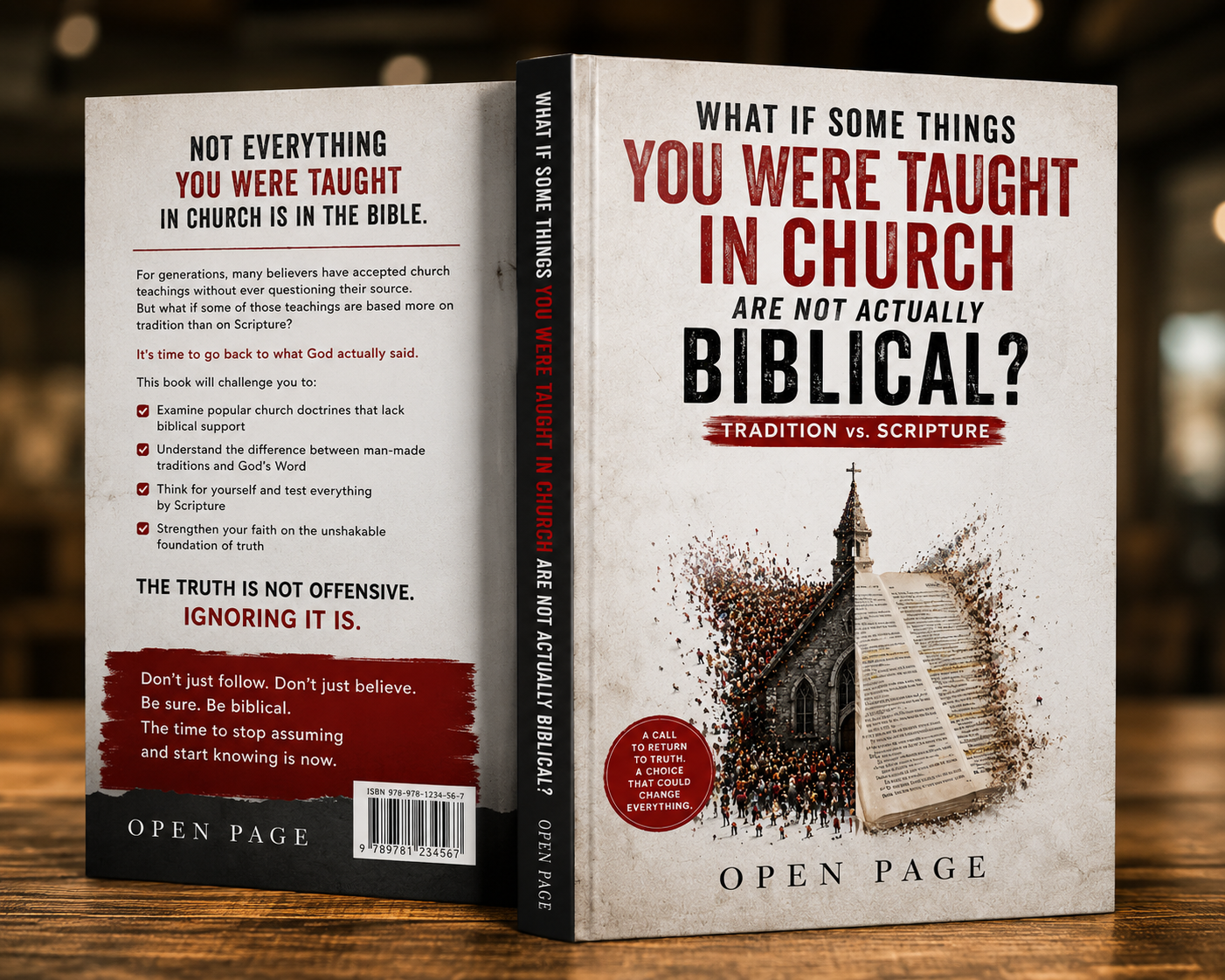
What If Some Things You Were Taught in Church Are Not Actually Biblical?

What If The Bible Never Actually Said That?
The Book That Will Make You Fall In Love With Scripture Again — By Showing You What It Actually Says
Be honest with yourself for a second.
How much of what you believe about the Bible... did you actually get from the Bible?
Or did it come from a nativity play. A cartoon. A sermon illustration you heard so many times it started to feel like Scripture. A phrase your grandmother used to say, with total confidence, like it came straight from Psalms.
Here's the uncomfortable truth: a shocking number of things Christians confidently believe are "biblical" are not in the Bible at all.
Not the three wise men at the manger.
Not the apple in the Garden of Eden.
Not "money is the root of all evil."
Not "God helps those who help themselves."
Not even the red, horned devil with a pitchfork.
None of it is in Scripture. Not one word.
And once you see how these ideas got in — through art, poetry, pop culture, and centuries of repetition — you'll never read your Bible the same passive way again.
Introducing:
What If Some Things You Were Taught In Church Are Not Actually Biblical?
Tradition vs. Scripture
A journey back to the actual text — chapter by chapter, tradition by tradition — separating what God really said from what got quietly added along the way.
This Is NOT An Attack On The Church.
Let's clear something up right away, because I know exactly what might be running through your mind.
This is not a book written to mock tradition, embarrass believers, or tear down the church.
It's the opposite.
It's written by someone who loves Scripture enough to want it standing on its own — not propped up by borrowed images, poetic misquotes, and centuries-old artistic guesswork. Every tradition unpacked in this book was passed down by people who loved God sincerely. This book simply asks the question they never got around to asking:
"Where did we actually get this — the Bible, or somewhere else?"
Here's Exactly What You'll Discover Inside:
✅ Why the wise men were NEVER at the manger — and what Herod's own reaction reveals about how much later they actually arrived
✅ The real meaning behind "money is the root of all evil" — and why the popular version of this verse might be making you feel guilty for nothing
✅ Why "God helps those who help themselves" is the opposite of the gospel — and where this famous "Bible verse" actually came from (hint: it's not the Bible)
✅ The apple that was never an apple — a 1,600-year-old Latin pun that shaped how millions picture the Garden of Eden
✅ The whale that was never a whale — and the far more uncomfortable part of Jonah's story that gets skipped every single time
✅ Where the horns and pitchfork really came from — and why the real biblical picture of deception should concern you more, not less
✅ Is tithing actually commanded in the New Testament? — the honest answer, without guilt and without dodging the question
✅ What actually happens to believers when they die — and why it's NOT what you think, and it's better news than "becoming an angel"
✅ The parenting verse that isn't a verse — and what Scripture actually says about discipline, examined fairly from every angle
✅ What heaven really looks like according to Revelation — and why it's a far bigger, more exciting hope than clouds and harps
Who This Book Is For:
This book is for you if...
- You've ever quietly wondered, "Wait... is that actually in the Bible?" and never had the time or tools to check
- You want a faith that's built on Scripture itself, not just what you absorbed by osmosis
- You're tired of surface-level Christian content and want something that actually makes you think
- You want to read your Bible with fresh eyes, without needing a theology degree to do it
- You love tradition, but you love truth more
The Real Question Isn't Whether You Have Time For This Book.
It's whether you're willing to keep believing things about the Bible that aren't actually in the Bible.
You've made it this far in your faith on tradition, memory, and things you were told. Imagine what your faith looks like once it's standing on the text itself.
"Familiarity is not the same as accuracy. Popularity is not the same as truth."
Your Bible is waiting. Isn't it time you actually read what it says?