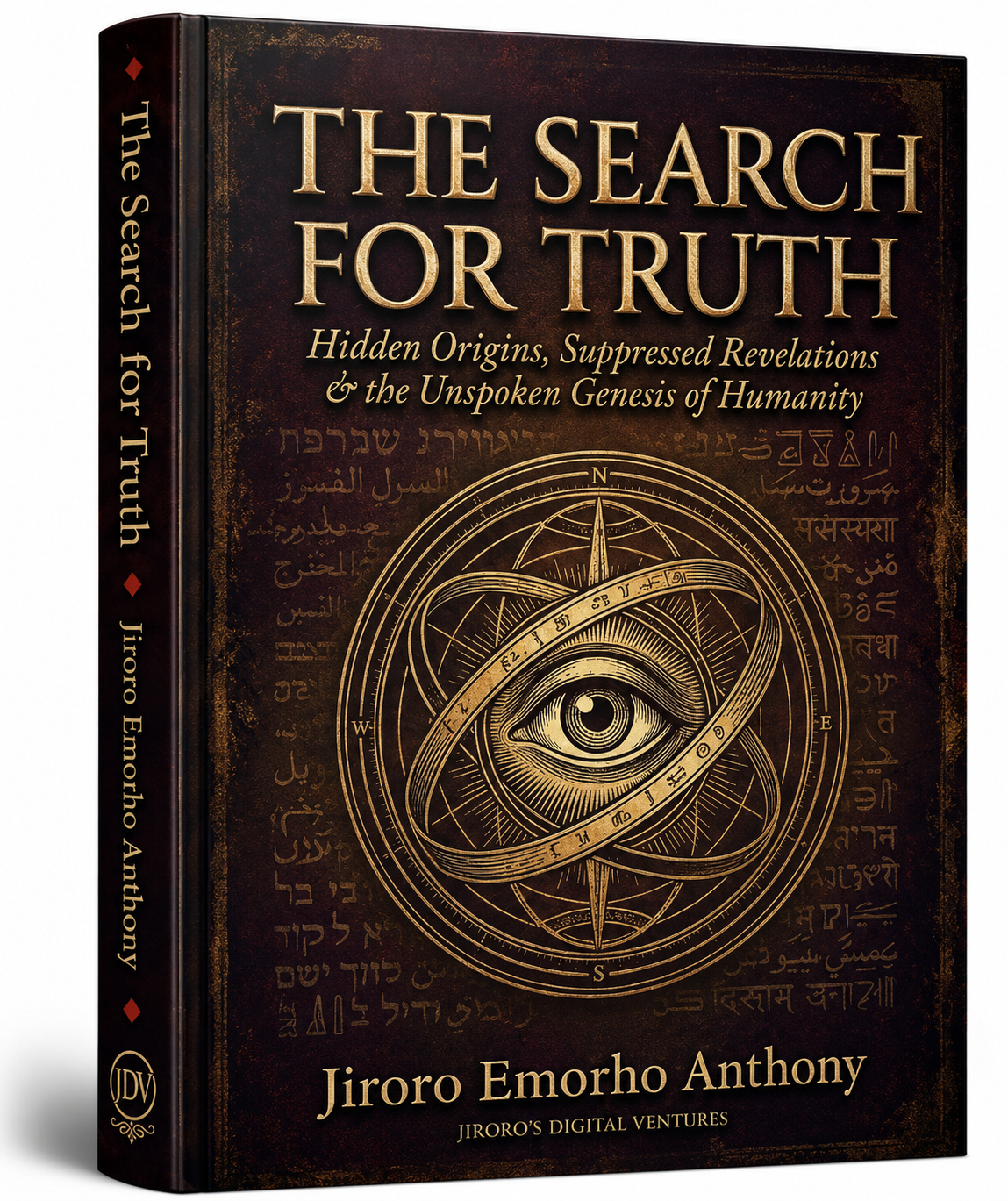
THE SEARCH FOR TRUTH

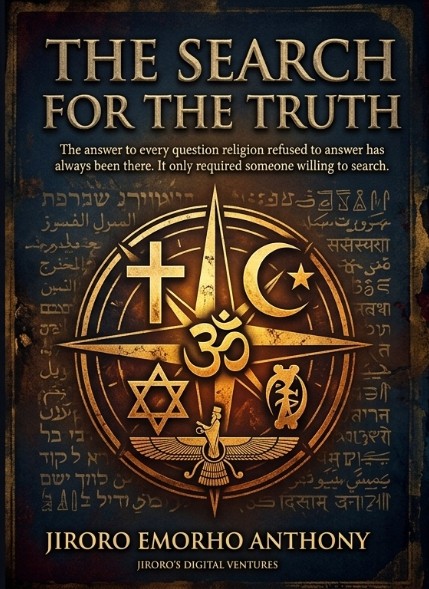
 THE SEARCH FOR THE TRUTH
*Hidden Origins, Suppressed Revelations, and the Unspoken Genesis of Humanity*
Every holy book on earth arrives at the same silence in the same place.
This is the book that finally speaks.
For thousands of years, billions of people have read the Bible, the Quran, the Torah, and the sacred texts of every major tradition on earth. They memorized the verses, built civilizations on the promises, and defended the words at the cost of their lives. Yet every sincere reader, in every generation, has encountered the same questions that the institutions of religion chose never to answer.
Where did Cain's wife come from — in a world where only three people existed? Who were the people Cain feared would kill him after he murdered his brother? Why does Genesis describe two different creation accounts, with two different names for God, in two different styles, placed back to back as though the author did not notice the contradiction? Who was the first woman God created before Eve — the one whose name survived only in the buried layers of ancient Jewish mystical tradition, transformed from equal into demon by the men who feared what she represented? Which books were removed from the Bible, by which councils, and why? What did the Quran's own classical scholars say about the beings who occupied the earth before Adam was created? And why do the flood myths of Mesopotamia, India, Greece, West Africa, China, and the Americas all tell the same story?
These are not the questions of doubt. They are the questions of a faith honest enough to demand the full truth.
*The Search for Truth* draws on canonical scripture, suppressed manuscripts, pre-biblical texts, comparative theology, archaeology, and modern genetics to assemble — for the first time in a single volume — the complete picture of human origins that every major religious institution has kept fragmented across centuries. It examines the four source traditions woven into the Torah before the Bible existed. It recovers the Book of Enoch, the Gospel of Thomas, the Gospel of Mary Magdalene, and the Nag Hammadi library — the texts excluded from the canon not because they were false, but because they were dangerous to the architecture of institutional power. It traces the Uthmanic codification of the Quran and what was known to exist in the variant manuscripts that were ordered destroyed. It places the Zoroastrian Avesta, the Hindu Vedas, the Yoruba creation tradition, and the Babylonian Enuma Elish alongside Genesis and finds not contradictions but the same memory, spoken in different languages by different peoples who witnessed the same God.
What emerges is not a smaller faith. It is a larger one.
The first woman — called Lilith in the oldest strands of Jewish tradition — was created from the same substance as Adam, not from his rib, not derivative of him, but his equal in origin. She departed Eden by her own will, not by divine expulsion, and became the mother of the lineage outside the garden — the people already living in the land when Cain was sent into exile. The people who gave him his wife. The people the mark of God was placed on his forehead to protect him from. Their existence is not hidden in this book. It is stated plainly in the text of Genesis itself, by anyone willing to read it without the filter of an institution that found their existence inconvenient.
The creation of Adam was not the first act of biological humanity. It was the inauguration of the first spiritually conscious human — the moment God breathed the divine neshamah, the breath of relational spiritual life, into a being whose biological species had already walked the earth for three hundred thousand years. The six days of creation were not a speed record. They were six epochs of divine ordering, each inaugurating a new category of existence in a process that the text itself, read honestly, does not constrain to a single week.
The Great Flood was not the end of all human life on earth. It was a regional catastrophe of world-ending magnitude for the people who experienced it — and the survivors outside Noah's ark are the ancestors of every civilization that developed independently: in sub-Saharan Africa, East Asia, the Americas, and Australia. Their survival is not a contradiction of the flood narrative. It is confirmation that God's creative and redemptive work has never been confined to a single boat.
This book does not exist to destroy your faith. It exists because your faith is big enough for the full truth — bigger than any council that voted on which books to burn, bigger than any empire that needed a manageable God, bigger than any institution that built its authority on the questions it refused to answer.
The truth was never hidden by God.
It was hidden by the people who feared what a fully informed believer could not be controlled into doing.
*"The search itself is sacred. The God who made you curious did not do so to torment you. The answer exists. Keep searching."*
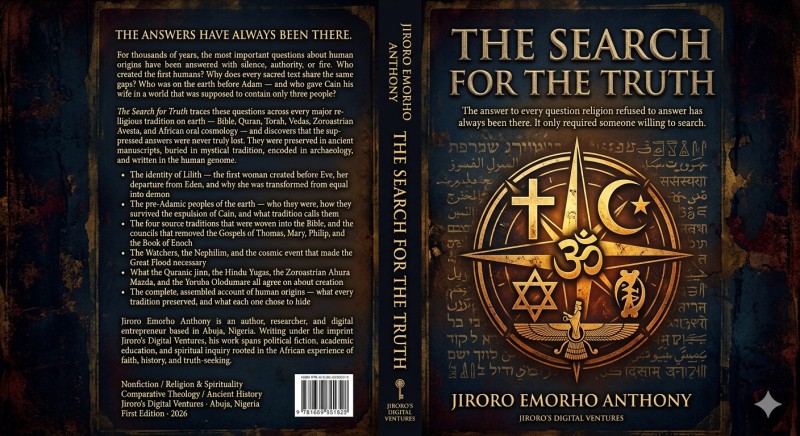
*Jiroro Emorho Anthony** is an author, researcher, and digital entrepreneur based in Abuja, Nigeria, writing under the imprint Jiroro's Digital Ventures. His work spans political fiction, academic education, and spiritual inquiry rooted in the African experience of faith, history, and the long pursuit of truth.
**Category:** Nonfiction · Religion & Spirituality · Comparative Theology · Ancient History
**Publisher:** Jiroro's Digital Ventures, Abuja, Nigeria
**Edition:** First Edition, 2026