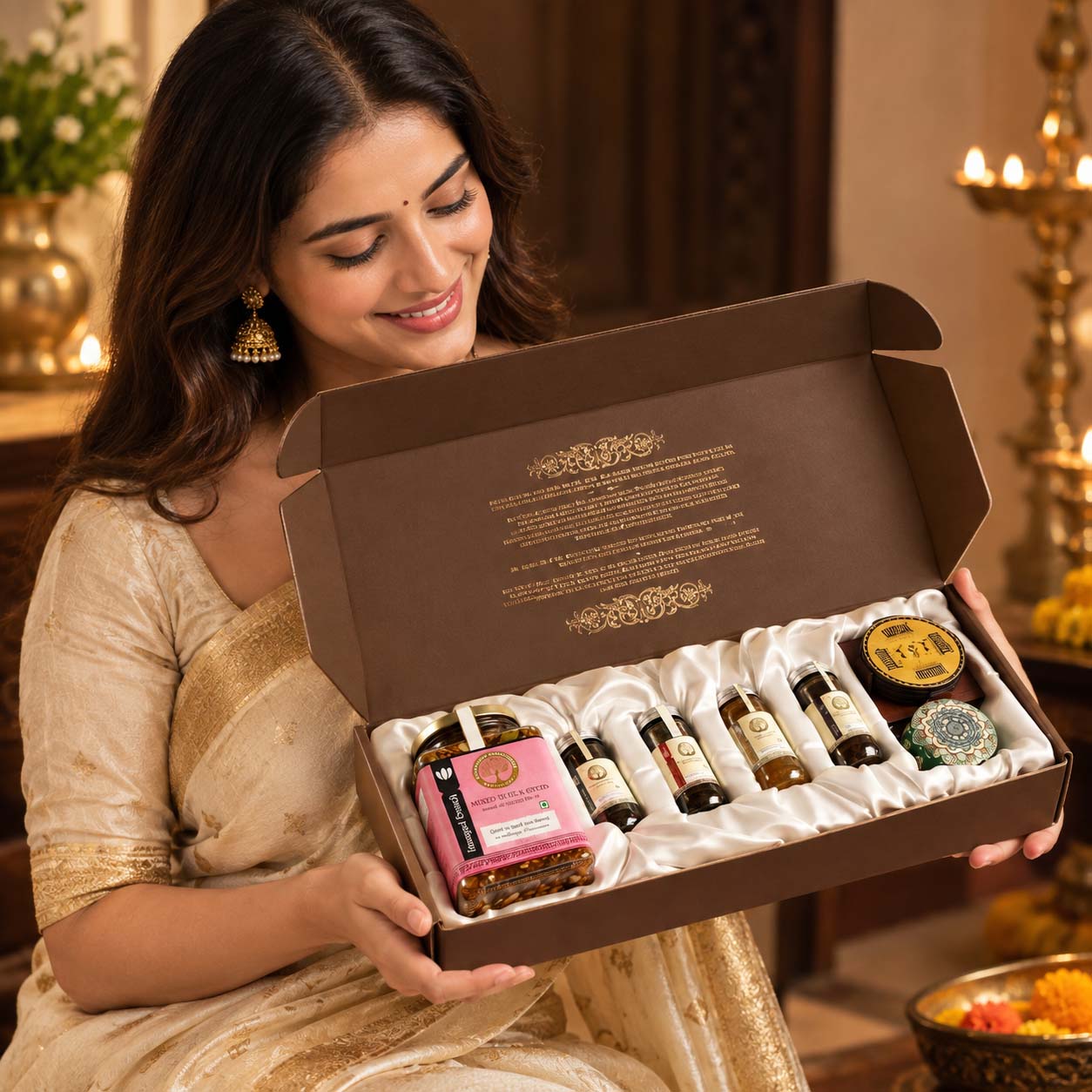
Diwali Gifting Ideas: How Forest Honey Connects Families, Forests and Communities
Diwali gifting in India has traditionally been centered around sweetness, hospitality and good wishes. Today, families and businesses are increasingly looking beyond conventional boxes of sweets for Diwali gifting ideas that feel personal, useful and connected to Indian traditions.
Among the many possibilities, forest honey offers a particularly interesting approach to festive gifting. A jar of honey can carry a story of regional landscapes, flowering seasons, traditional knowledge and the people involved in bringing a natural food from its source to the festive table.
For families, employees, clients and business partners, that sense of origin can make a simple food gift feel considerably more thoughtful.
A Memory Wrapped in Gold
Imagine a young corporate professional preparing his annual Diwali gifting list.
The familiar options are everywhere: chocolates, packaged sweets, stationery sets and conventional corporate hampers. They are practical and easy to order, but receiving similar boxes every year can make festive gifting feel predictable.
Then comes a memory.
He remembers visiting his grandmother's home during Diwali. On her kitchen shelf sat a small jar of honey. It appeared during family gatherings and was enjoyed in simple ways-with breakfast, beverages or traditional preparations.
What remained with him was not the packaging or price. It was the association with home, family and the small rituals that made the festive season memorable.
Years later, while looking for a different kind of Diwali gift, he began exploring Indian products with a stronger connection to their origins.
The idea was simple: perhaps a festive gift does not need to be extravagant to tell a meaningful story.
From Indian Forest Landscapes to the Festive Table
India's varied geography creates an equally varied landscape for honey production.
Bees forage on flowering plants according to local vegetation, geography, climate and season. These factors can influence honey's natural colour, aroma, texture and flavour.
Forest honey is especially interesting because its character can reflect the wider environment in which bees forage rather than being associated with a single cultivated crop.
Across different parts of India, traditional honey collection is connected with local knowledge and seasonal practices. In some forest-dependent communities, honey and other non-timber forest products form part of broader rural livelihood systems.
The relationship between bees and landscapes also gives honey a wider ecological context. Bees are important pollinators, and pollination contributes to the functioning of natural ecosystems as well as agricultural systems.
For consumers, this makes honey more than a pantry product. It can also be an opportunity to think about food provenance, Indian natural heritage and responsible sourcing.
However, not every honey product has the same sourcing story. The details depend on the region, harvesting practices, supply chain and producer.
That is why transparency matters.
The Story Behind a Jar
A thoughtfully presented honey gift can introduce the recipient to more than a flavour.
It can introduce them to a region.
Honey collected in one part of India can differ from honey produced elsewhere because of variations in flowering plants, climate, season and local landscape.
This connection between product and place is increasingly relevant to premium food gifting.
Instead of simply asking, "What is inside the box?", a recipient can ask:
- Where did it come from?
- What makes this honey different?
- How was it collected and handled?
- What region does it represent?
Those questions add another dimension to the gifting experience.
For people interested in exploring origin-led Indian honey, Royal Bee Brothers is one example of a brand offering a range of Indian honey varieties and regional sourcing stories. Its products provide an example of how provenance can become part of the presentation and experience of a festive food gift.
5 Reasons Forest Honey Fits Diwali Gifting
1. It Connects Naturally With Festive Sweetness
Sweetness is closely associated with Indian celebrations.
Diwali tables traditionally feature mithai, desserts and festive foods, making honey a natural addition to the season.
Rather than being consumed as a single celebratory sweet, honey can become part of the recipient's everyday pantry.
That gives a festive gift usefulness beyond the day it is received.
2. It Brings a Sense of Provenance
Premium gifting is increasingly about the story behind a product.
A jar accompanied by information about its region, floral character or harvesting tradition gives the recipient something to discover.
This sense of provenance can make a modest food product feel more distinctive than a generic packaged item.
3. It Is Practical
Decorative gifts may look impressive when opened but can eventually remain unused.
Honey, by contrast, is a familiar food product that can be incorporated into breakfasts, beverages, desserts and home recipes according to individual preferences.
Its everyday usefulness can extend the life of the gift.
4. It Represents Indian Food Heritage
Indian food culture is closely connected with geography.
Spices, grains, fruits, forest products and traditional foods all reflect the environments in which communities live and work.
Forest honey fits naturally into this larger story of regional Indian food heritage.
5. It Encourages More Thoughtful Purchasing
Festive gifting can also encourage consumers to ask more questions about what they buy.
- Where was the product sourced?
- Is the origin clearly described?
- How is it packaged?
Does the producer provide information about quality and handling?
These questions help shift gifting from simply choosing attractive packaging to understanding the product inside it.
Designing Corporate Diwali Hampers
For businesses, choosing corporate Diwali hampers often involves balancing presentation, usefulness and suitability for different recipients.
A forest honey hamper can provide a natural foundation for a curated festive gift.
A thoughtfully assembled hamper might include:
- Indian forest honey
- Premium nuts or pantry products
- A wooden honey dipper
- Beeswax candles or traditional festive lights
- A personalised Diwali greeting card
- Carefully selected reusable or recyclable packaging
The objective does not have to be maximum quantity.
A smaller hamper with a clear theme and thoughtful presentation can communicate more effectively than a large collection of unrelated products.
For companies exploring festive gifting & honey, combining a natural food product with personalised presentation can create a distinctive alternative to conventional corporate gifts.
The approach works for client gifting, employee appreciation, business partners and festive relationship-building.
Making the Hamper Feel Personal
The difference between an ordinary hamper and a memorable one often comes down to presentation.
- A short card explaining the honey's region of origin can give the recipient context.
- A tasting note can explain differences in aroma, colour or texture.
- A wooden dipper or handcrafted festive accessory can add an artisanal touch.
- A reusable glass container can continue to be useful after the honey has been enjoyed.
Personalisation can also be simple.
A company logo, recipient name or handwritten Diwali message can make a standard gift feel considerably more intentional.
The goal is not to make the hamper complicated. It is to give every element a reason for being there.
The People Behind Forest Products
The story of forest honey also involves the people who collect, process, handle and bring forest-based products to market.
Across India, rural and forest-dependent communities have long interacted with natural resources as part of local economies and traditional livelihoods.
Market access can play an important role in determining how rural products reach consumers and how much value remains within the communities and businesses connected to them.
For that reason, responsible sourcing deserves attention.
Consumers can look for information about product origin, purchasing practices, traceability, quality handling and the relationship between producers and buyers.
It is important not to assume that a product is automatically sustainable simply because it is described as "natural" or "forest sourced."
Good sourcing requires transparency.
Eco-Friendly Festive Gifts: Look Beyond the Label
The demand for eco-friendly festive gifts in India has also increased interest in packaging and product longevity.
But an environmentally conscious gift should not be defined by a label alone.
Consider the complete package.
- Can the container be reused?
- Is unnecessary packaging avoided?
- Are materials appropriate for the product?
- Can decorative components have a second use?
- Does the product itself have practical value?
A glass honey jar, reusable container or carefully designed box can potentially remain useful after the festive season.
The most thoughtful approach is to consider the entire lifecycle of the gift rather than simply calling a hamper "eco-friendly."
A Smart Buyer's Guide to Choosing Honey
Whether purchasing honey for personal use or as part of a corporate hamper, a few basic checks can help.
Look for Clear Origin
A credible product should provide meaningful information about its source and producer.
Read the Label
Check the product information, ingredients where applicable, net quantity, batch information and other required labelling details.
Understand Processing
If a product is described as raw, minimally processed or otherwise specially handled, consumers should look for clear information explaining what those terms mean for that product.
Consider Traceability
For premium or origin-specific honey, information about sourcing and supply chains can add confidence.
Look for Quality Information
Food-safety compliance and credible quality-testing information can be useful considerations when comparing honey products.
Colour, thickness or crystallisation alone should not be treated as definitive proof of honey quality.
Diwali Gifting With a Sense of Place
The strongest Diwali gifting ideas do not necessarily need to be the most expensive.
They need to feel considered.
A forest honey hamper can combine several elements that work naturally together: sweetness, Indian food heritage, regional identity, practical use and thoughtful presentation.
For a family, the gift can become part of a festive breakfast.
For an employee, it can be a useful festive gesture rather than another decorative object.
For a business partner, it can communicate appreciation through something rooted in Indian culinary culture.
The story becomes part of the gift.
The Sweetness That Remains
When the Diwali lights eventually come down and the festive season ends, many gifts are quickly forgotten.
The ones that remain memorable often have something beyond their price or appearance: a story, a personal connection or a sense of place.
Forest honey offers that possibility.
A simple jar can connect the recipient with Indian landscapes, flowering seasons, bees, traditional knowledge, food heritage and the people involved in bringing the product to market.
That is what makes origin-led festive gifting so interesting.
It is not simply about giving something sweet.
It is about giving something with meaning, usefulness and a connection to where it comes from.
And sometimes, the smallest jar can carry the biggest story.