Downloadable
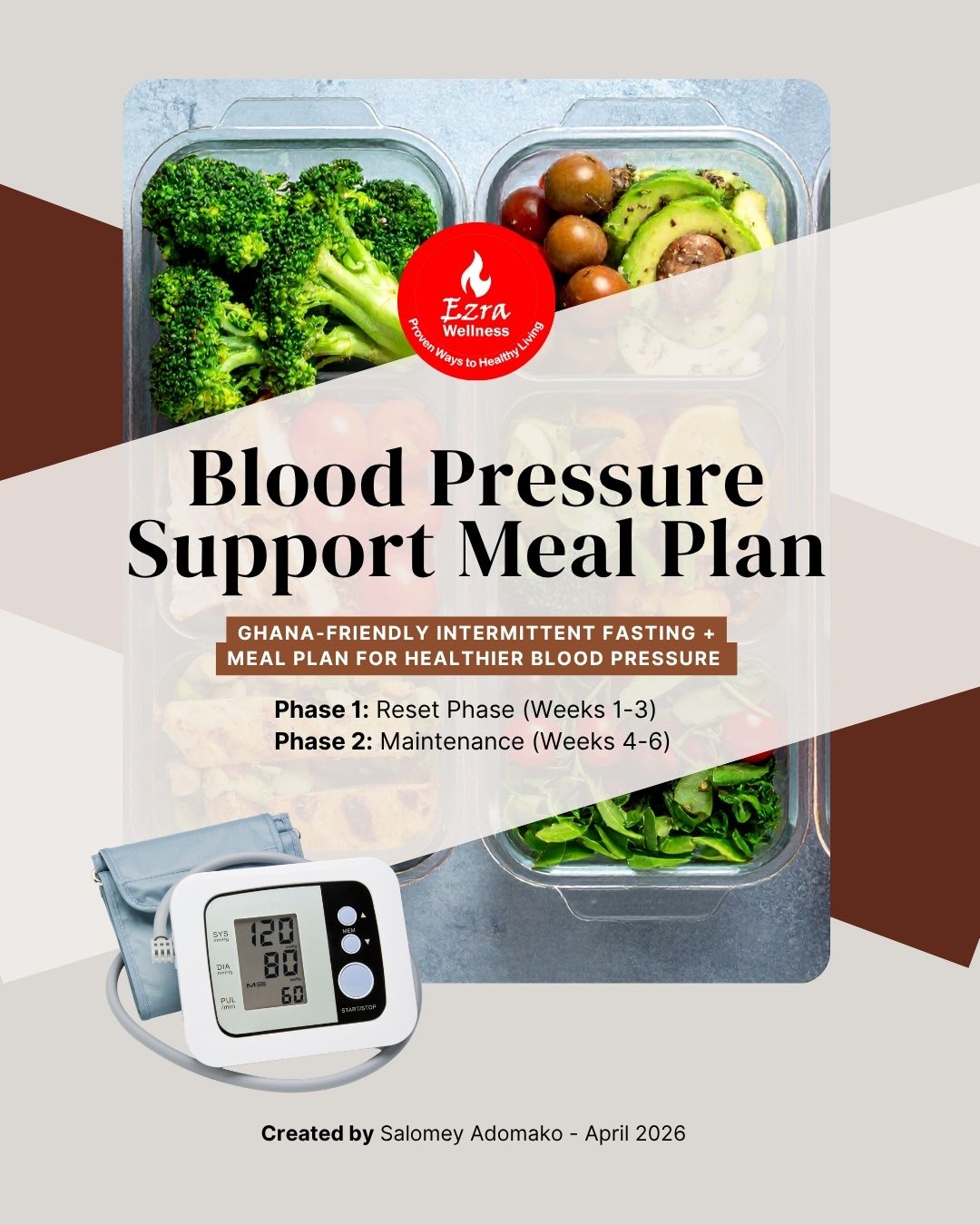
Blood Pressure Support Meal Plan
(0 Ratings)
1
$24.99+
$
The Ezra Wellness Blood Pressure Support Meal Plan is a structured lifestyle guide created by Salomey Adomako (April 2026) that combines intermittent fasting with a culturally relevant, Ghana-friendly diet. The program is designed to support healthier blood pressure levels through natural nutrition, consistent monitoring, and specific movement routines.
The 6-Week Strategy Breakdown:
- Phase 1: Reset Phase (Weeks 1–3): A focused period to jumpstart results by rotating through fasting windows, starting with 16:8 in Week 1, moving to 18:6 in Week 2, and concluding with 24-hour fasting (one meal per day) in Week 3.
- Phase 2: Maintenance (Weeks 4–6): Transitions to a sustainable daily 16:8 routine where you pick a consistent 8-hour eating window (e.g., 10am–6pm or 12pm–8pm).
- Daily Routine: Every day begins with a blood pressure check and warm water (8–16 oz), followed by light movement like walking or stretching.
Key Nutritional Pillars:
- Natural Spices: Emphasizes using ginger, garlic, onions, prekese, bay leaf, and lemon to flavor food instead of high-sodium additives.
- High-Potassium Foods: Prioritizes local vegetables like kontomire (spinach), okra, garden eggs, and avocado.
- Protein Consistency: Every meal should include high-quality protein such as tilapia, mackerel, sardines, chicken, turkey, or goat.
- Controlled Carbs: Focuses on "smarter" carbs in small portions (1/4 of the plate), including unripe plantain, sweet potato, cocoyam, and boiled yam.
Safety & Supplements:
- Fasting Precautions: This plan is not suitable for those who are pregnant/breastfeeding, underweight, have Type 1 diabetes, or suffer from chronic kidney, liver, or heart disease.
- Monitoring Requirement: Users are instructed to use an upper-arm cuff monitor to track BP twice daily (morning and evening).
- Supplementation: Recommends 400 mg of Magnesium Glycinate nightly and a 25-OH Vitamin D blood test to determine specific deficiency needs.
Important Disclaimer: This guide is for lifestyle support and does not replace professional medical care. Do not stop or change blood pressure medication without consulting your clinician. Seek immediate urgent care for severe symptoms or high readings exceeding 180/120+.