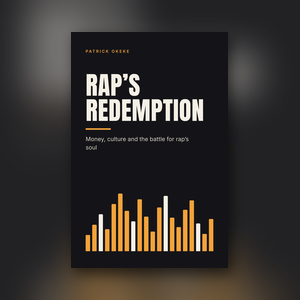
Raps Redemption
From the Streets to the Charts. But at What Cost?
In the early 1990s, rap was raw, political and fearless. Artists like N.W.A, Ice Cube and Public Enemy told the truth about police brutality, poverty and life on the streets, and the world couldn't ignore them. Then the money arrived. Major record labels moved in, crossover hits took over the charts, and the music that once spoke for the voiceless became one of the biggest businesses on earth.
Rap's Redemption tells the story of that transformation: how hip-hop was framed by the media, sold to the masses, and reshaped by commercial success. It asks the question every true fan has wondered: can rap stay real in a world built to sell it?
What you'll discover:
• The birth of a sound: how early 90s rap gave a voice to marginalised communities, and how the media twisted its message
• Why the media painted rap artists as violent and uneducated, and the brilliant storytelling it ignored
• The money machine: how major labels changed what rap sounded like, looked like and stood for
• Crossover success and cultural appropriation: what happened when mainstream America started listening
• The long-term impact of commercialisation on artists, fans and the culture
• What "authenticity" means in rap today, and how independent artists and streaming are changing the game
• Rap goes global: how artists like Nigeria's Burna Boy are fusing Afrobeat and hip-hop and taking it to the world
• The future of rap: where the culture is headed next
This book is for you if you are:
• A hip-hop fan who wants to understand the story behind the music
• An artist, producer or creative trying to stay authentic in a commercial industry
• A student of music, media or culture
• Anyone curious about how money, media and race shaped one of the world's most powerful art forms
Rap was born as a voice for the voiceless. This book explores how it lost its way, and how it's finding its redemption.