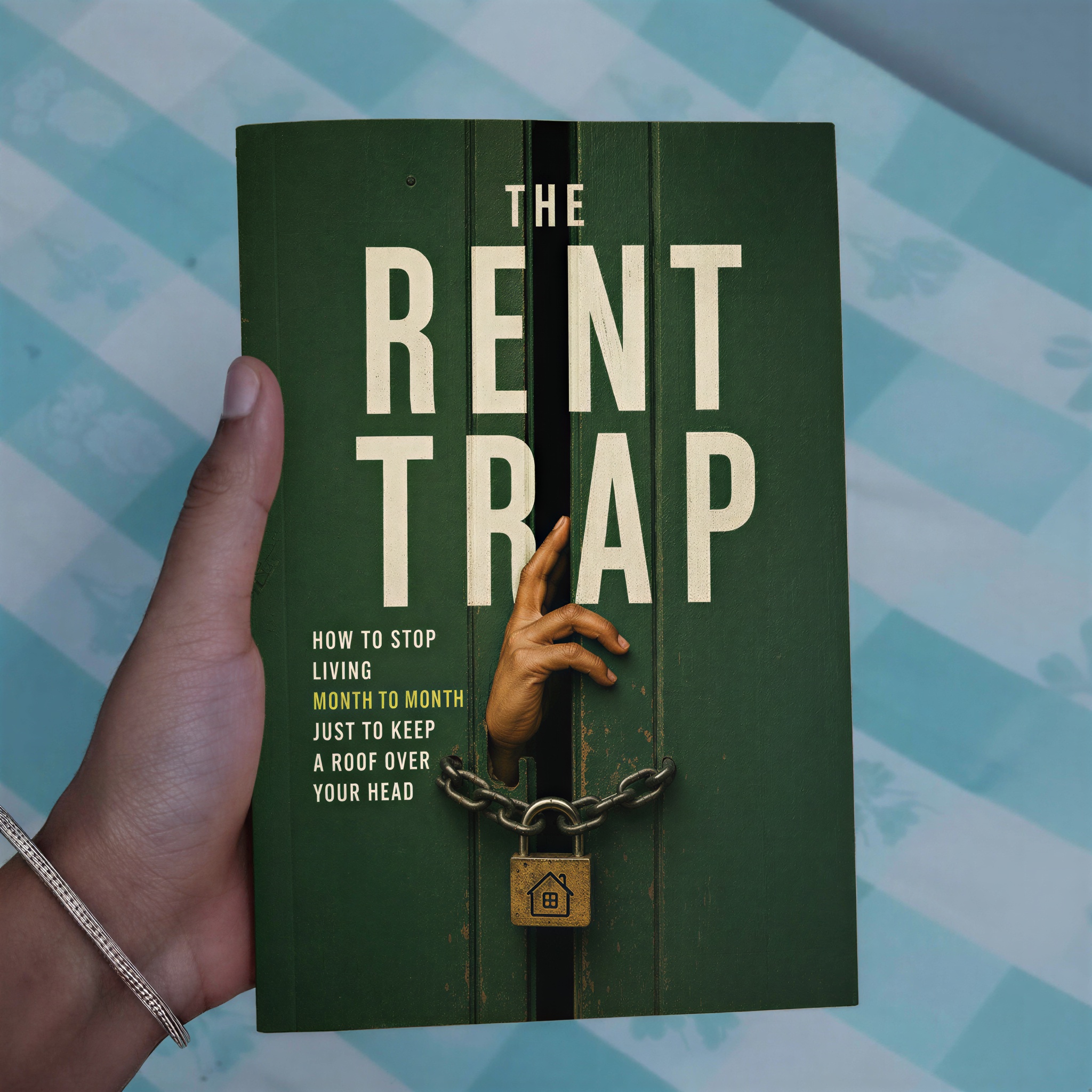
THE RENT TRAP — How To Stop Living Month To Month Just To Keep A Roof Over Your Head.

You know what your rent costs. You have never calculated what it is costing you.
There is the number on your lease. And then there is the real number, the one that includes the interest-free loan you hand your landlord every time you pay two or three years in advance, the investment returns you will never see because that lump sum sat in someone else's account instead of yours, the overpriced accommodation you stay in year after year because the cost of moving feels worse than the cost of staying, and the negotiation you never had because nobody told you the landlord built room for one into the asking price.
You are not paying rent. You are being charged more than market rate for accommodation you accepted without negotiating, structured to drain your liquidity at the exact moments you need it most, on a cycle the landlord controls entirely.
The problem is not that rent is expensive. The problem is that you have been participating in a financial arrangement designed to benefit the landlord and absorb the tenant, without any of the tools that would shift even part of that arrangement in your direction.
This book gives you those tools.
💸 THE INVISIBLE COST YOUR LEASE DOES NOT SHOW YOU
The number on your lease is not what your rent is costing you. This book walks you through a two-step audit that reveals the full cost of your housing, including the opportunity cost of every advance payment, the compounding value you have surrendered across your years of tenancy, and the single most reducible line item in your current housing expenditure. You cannot manage what you have not measured. This is the measurement.
📈 HOW TO NEGOTIATE THE RENT YOU ARE CURRENTLY PAYING
Your landlord set the asking price with a negotiation in mind. Every year you accept without negotiating, you pay the buffer he built in for someone who would push back. This book shows you exactly what creates leverage for a tenant in the African rental market, how comparable market data changes the conversation, what the landlord needs to hear to take a reduction seriously, and why the renewal negotiation is more powerful than the entry negotiation most tenants focus on.
🧠 HOW TO CONVERT THE ADVANCE RENT DEMAND FROM A CRISIS INTO A SCHEDULE
The advance rent demand does not arrive without warning. The date is in your tenancy agreement. The amount is calculable. Yet most tenants arrive at that date without a dedicated savings structure, and the options narrow to emergency borrowing, depleting other savings, or defaulting. This book gives you the exact savings architecture that converts the demand into a scheduled financial event you meet with preparation, including the buffer for the annual increase the landlord will almost certainly demand at renewal.
🎯 THE NUMBER YOU SHOULD CALCULATE BEFORE YOU SIGN ANY LEASE
There is a ratio of rent to income above which no amount of discipline in other areas of your spending will compensate. This book shows you exactly how to calculate it, what the benchmarks are that tell you whether a proposed rent is workable or structurally unsustainable, and how to set a ceiling before you walk into any property viewing so that the decision is made by a framework you chose in advance rather than by the emotional pull of a specific apartment.
⚔️ WHEN THE MONEY YOU SPEND ON RENT SHOULD GO SOMEWHERE ELSE
For a specific group of renters, there is a point at which the advance rent discipline they are already demonstrating every one to three years would build something real if redirected. This book helps you calculate whether you are at that point, what incremental land acquisition and staged construction actually costs in accessible locations, and what the specific first action looks like for the tenant whose rent spending could become asset building with a single deliberate decision.
💡 WHAT MAKES THIS BOOK DIFFERENT
Most personal finance books in the African space talk about saving and investing without addressing the single expense that is making both impossible. This book starts where the financial pressure actually lives, in the advance rent structure, the negotiation gap, and the rent-to-income ratio that most tenants cross without calculating, and gives you five named, specific tools you can apply this month in your current city at your current income. Nothing here requires better conditions than the ones you already have.
✅ BENEFITS YOU WILL NOTICE
📌 A clear picture of what your housing has actually cost you across every dimension, including the ones no lease ever shows you
📌 The specific preparation that turns a renewal conversation from a landlord announcement into a genuine negotiation
📌 A savings system running before the next advance demand arrives, so you meet it with a schedule instead of a scramble
📌 The habit of calculating rent-to-income ratio before viewing a property rather than after signing one
📌 Less financial anxiety at the end of every tenancy cycle because the money is already set aside
📌 A clear framework for knowing whether your current rent discipline would serve you better redirected toward land or incremental construction
📌 A specific first action, with a thirty-day deadline, for the tenant who is ready to stop the advance rent cycle entirely
I wrote this book for the tenant who has been paying the price a landlord set for someone who would not push back. You did not know you could push back. You know now. — Youbeoga Innovations
👤 WHO THIS BOOK IS FOR
✅ For the working adult in Lagos, Abuja, Nairobi, or Accra who pays one, two, or three years of rent in advance and has never once negotiated what that amount should be
✅ For the tenant who scrambles at every renewal because no savings structure was running in the months before the demand arrived
✅ For the person who has signed a lease without calculating what percentage of their income housing was about to consume
✅ For the renter who knows they are overpaying for their current accommodation but has never had a specific framework for proving it to a landlord
✅ For the professional whose income has grown steadily while their financial position has not, because the advance rent demand absorbs every surplus before it can compound into anything
✅ For the tenant who has been wondering, privately and without a clear answer, whether the money leaving their account in rent every cycle could be building something instead
🔄 FROM WHERE YOU ARE TO WHERE YOU ARE GOING
From meeting every advance demand with emergency borrowing to meeting it with a savings account you built specifically for that purpose
From accepting the asking price as the actual price to knowing exactly what the market supports before the conversation starts
From signing leases based on whether you can afford the advance to calculating the ratio before you walk through the door
From carrying the cost of your housing without measuring it to knowing the real number across every dimension it touches
From permanent tenant by default to permanent tenant by choice, or by decision to stop
👉🏽 Click "I Need A Copy" and take back control of the expense that is currently taking the most from you.