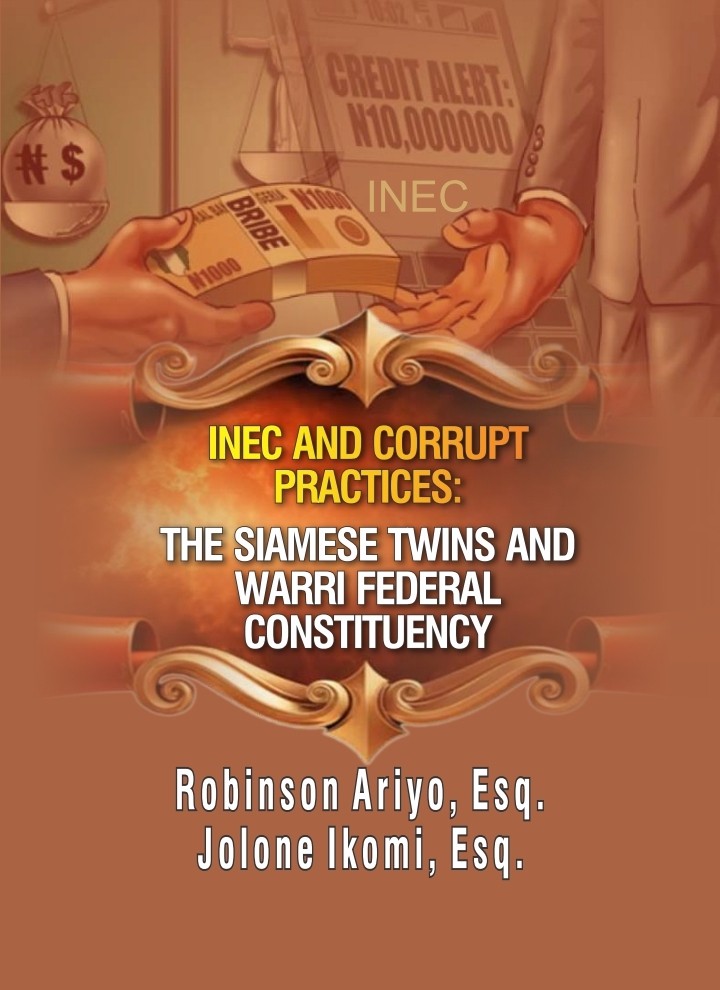
INEC AND CORRUPT PRACTICES - The Siamese Twins and Warri Federal Constituency
This thesis reveals a shocking tale of how a Government Institution is manipulated by State and Non-State Actors with vested interest and ulterior motives tilted along ethnic coloration to distorted the sacred functions of the Independent National Electoral Commission (INEC) with particular reference to Warri Federal Constituency Ward Delineation Exercise carried out by INEC.
PREFACE
As a student of Philosophy with an exceptional flare for Sociopolitical Philosophy, I have spent substantial part of my university and post university education life in thoughts of how to protect the vulnerable components of the society.
The history of human civilization is replete with the struggle of the oppressed and marginalized people in the society; from the recent war in Gaza to that in Ukraine; from the old Civil Rights struggle in America, the cry of marginalization resonates everywhere.
Even a major ethnic group like Igbo that is small relative to the other two (Hausa and Yoruba) is showing the symptoms of a sufferer of marginalisation.
The Niger Delta region as a bloc is doing wailing under the same oppression; asking that the goose that lays the golden eggs should be pampered.
The Itsekiris who predominate 3 of the 774 Local Government Areas in Nigeria but account for the highest oil production quota of any singular ethnic group in Nigeria are making the same demands for national and international attention.
The marginalization of the Itsekiri people is visible to the naked eyes as their political fortunes have been and continues to be depleted by the relatively bigger neighbours of the Itsekiris (Ijaw and Urhobo) who borrow human and material resources from their kits and kins from several other Local Government Areas and States in Nigeria in collaboration with INEC and corrupt practices to prosecute an agenda of pogrom against the Itsekiri people in Warri Federal Constituency, the aboriginal home of Itsekiri.
The above is despite the fact that the Ijaws and Urhobos have not only been adjudged customary tenants by a plethora of court judgments, but are in fact and by empirical data, minorities in relation to their Landlords, the Itsekiris.
The Itsekiri people also have some of their home lands spread across Delta State apart from Warri Federal Constituency; in separate Local Government Areas predominated by the Ijaws and the Urhobos in Delta State. These home lands of Itsekiri are not accorded any consideration in the said areas.
The uniqueness of this book lies primarily in its uncovering the corrupt role of INEC in the background facts leading to the Supreme Court judgment, the Commission’s refusal to obey previous court judgments and orders till date just because these do not favour their pay masters.
It is interesting to reveal this anomaly which dates back to well over 23 years ago and this book fills the wide gap to provide for credible and reliable information for the relevant authorities to make proper decisions on this issue. It would also help those seeking enlightenment and students of history and democratic studies. The facts are well empirically documented, presented with surgical precision and mathematical accuracy.
While Agencies are being established and handsomely funded to cater for regions like the Niger-Delta, North East, etcetera, it is high time Nigeria examined the plight of micro-minority groups especially those that are the goose that lay the golden eggs.
'It is high time the relevant authorities sanctioned any attempt to dispossess any person or group of people
of the land which they owned before the formation of Nigeria. Self-help and extra judicial means for the acquisition
of land should be criminalize as this is not any of the ways recognized for proving ownership to land in Nigeria'- Robinson Ariyo, Esq
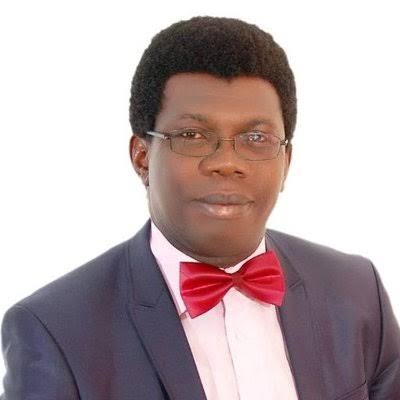
Robinson Ariyo, Esq.,
Jolone Ikomi, Esq.,
INTRODUCTION
True Path of Repair of its Electoral System.
A Brief Background
In an obviously metaphoric sense, it is our expression, that for more than 23 years, the Twins of Independent National Electoral Commission (INEC) and Corruption has manipulated Warri Federal Constituency in such a way and manner that is unknown anywhere else in Nigeria.
This book is a sad tale of the life of 'The Siamese Twins; INEC and Corrupt Practices; with particular focus on the 2025 proposal for the delineation of Warri Federal Constituency.
The work of this Twins is well known to every Nigerian who has witnessed their activities and as such requires no further proof as it enjoys sufficient notoriety. The writers are direct witnesses to the allegations of the facts contained in this book and therefore have presented credible and verifiable evidential materials in proof of the proposition in this work.
What may be new about the Twins is the work that it has executed for the Ijaws of Warri in the past 18 years or more and that which it has done for the Urhobos of Warri in the past 23 years or more; both of which set of works constitute the essence of this book.
Every right-thinking person should be utterly dismayed at the audacity and temerity of the said twins in that despite the obvious illegality and concomitant potentials for criminal indictment, officers of INEC remain unperturbed and willing to risk everything for the value of cash suspected to be the driving force of their commitment to the prevalent corrupt practices; the said cash which nomenclature has gained a new local appellation; “dollar-gbene”, is suspected to be tied in its origin to the surveillance contract awarded by the Federal Government of Nigeria to some of the characters in this scheme of corruption.
Despite the hue and cry over the 4th April, 2025 fraudulent proposal for the delineation of Warri Federal Constituency which at the time of this publication is yet being investigated with an inventory of pending litigation cases in court, INEC has surreptitiously begun partial execution of the said proposal notwithstanding the fact that investigations are ongoing, the report on the delineation is yet to be concluded and the mandatory constitutional approval for same from the National Assembly has not yet been obtained.
The Ethnicity Factor:
To place this exposition in proper perspective, it may be imperative to relate same with the critical sentiment underlining the stakeholders agitations; namely ethnicity and the struggle for domination.
Nigeria is a textbook example of the manifestation of the interplay between the majority and minority in the quest to dominate and to survive respectively. The survival of minority groups in these situations is existential especially in the Nigerian context in which micro minority groups are barely able to survive in the face of the assorted sizes of the ethnic groups in the country; Nigeria, being a multinational state inhabited by more than 250 ethnic groups speaking more than 500 distinct languages, all identifying with a wide variety of cultures. It is common knowledge that the three largest ethnic groups are the Hausa/Fulani in the North, Yoruba in the West, and Igbo in the East, together constituting over 60% of the total population. The core Hausas are currently in the minority conquered by the Hausa/Fulani ethnic group.
As between the three major ethnic groups for example, the recurring fear of a relative minority ethnic group is constantly felt by one of them resulting in one of the most fearsome agitations for succession in the country.
Biafra is the difficult and emotional example. The commemoration of Nigeria's civil war experience is still a contentious issue. After the military took control of political leadership in 1966, the former Eastern Region – predominantly made up of Igbo people and one of the three major ethnic groupings of Nigeria – proclaimed herself the ‘Republic of Biafra.’ This led to Nigeria’s civil war. More so, this experience has continued to influence Nigerian politics. In the recent years, the country has witnessed neo-Biafran movements, a coalition of some Igbo speaking Nigerians who claim to be Biafrans rather than Nigerians.
The contemporary Biafra agitation is built on systemic problems such as marginalization, economic inequality, social alienation, ethnic suspicion, and subordination amongst others.
The above example is intended to drive home the point that minority is a social barometer for measuring relative size. Applied to the extant context, the barometer enables us to gauge the challenges of distribution of power and resources in such a clime like ours where these benefits and entitlement are predominately driven by ethnicity. The Music Legend Bob Marley had the inspiration to echo a specie of this challenge when he sang the song “War”. The lyrics are said to be a near-exact repetition of a 1963 speech at the UN by the Ethiopian emperor Haile Selassie. An excerpt of the lyrics is reproduced below:
“Until the philosophy which holds one race superior
And another inferior
Is finally and permanently
Discredited and abandoned
Everywhere is war”
The above is certainly not a subscription for rebellion and war but an attempt to do a granular social explanation about the pains of selective treatment on the basis of race, ethnicity, religion or even sex. Ethnicity is only a variant of the discrimination on the basis of the circumstances of the birth of a man. In the case of ethnicity, the strand is the ethnic group to which the sufferer belongs occasioning his being marginalized.
In the light of the Itsekiri experience within the Nigerian context, it can be agreed upon that the Challenges of Minority Ethnic Groups predate the Union (Nigeria).
Permit us to recall one of the lines in our old National Anthem which has now been replaced by the New one: “The labour of our heroes past shall never be in vein”.
Right from 1957 when the fears and needs of the diverse people of this nation surfaced, our colonial masters began working with the founders of this nation on this subject of minority fears; of how to address the challenges of ethnic minorities in Nigeria.
In that year, the Willink Commission was established to critically evaluate the fears and agitations of the minorities and to find means of allaying their fears. In 1958, the Henry Willink’s Minority Commission Report characterized the Niger Delta as infrastructurally and generally poor, backward and neglected, and advised the government to establish a Federal Board to address the problems of the area.
Data obtained from primary and secondary sources were deployed to carry out a study using an analytical and narrative historical method. Findings indicate that despite the fact that the Henry Willink’s Minority Commission Report dates back to 1958, over 50 years after the Commission made its recommendations, the Niger Delta region is yet to witness the much-needed peace and the level of development as recommended.
Given the significance, timing and intellectual resources deplored towards the Willink’s Commission, it is not surprising that its report is as rich and relevant as ever; making it unjust not to borrow from it as a foundation for a discourse of this specie.
Expediency compelled the regional parties to harmonize and jointly dialogue with the British colonial authorities over constitutional reforms that culminated in independence. In spite of this development, regional divergences persisted. From another perspective, leaders of minority ethnic groups agitated for their own different states with the imminence of independence. In the alternative, they demanded constitutional safeguards as guarantees against their potential domination by majority ethnic groups in an independent Nigeria. In 1957, the colonial government convoked a commission to ascertain the facts, and thereupon, recommend measures of allaying the fears of minority ethnic groups in Nigeria. The popular idea among the minorities of creating separate states was rejected by the Willink Minority Commission in its report. In its place, it recommended that a “Bill of Rights” patterned along the European Convention on Human Rights be incorporated into the independence constitution as a way of guaranteeing minority rights through national integration. Consequently, copious provisions to protect some basic human rights and fundamental freedoms of all Nigerians were enshrined in the independence constitution.
Bearing in mind the above brief history of minority fears in Nigeria, one would need to ask; “if the Niger Delta Region is a minority in the Nigerian equation, how much more would be one of the states in the region (Delta State) and not just that but one of the 5 component ethnic groups, Itsekiri”? Perhaps we should be talking about micro minority ethnic group here! The reason is simple, even a major ethnic group like Igbo that is small relative to the other two (Hausa and Yoruba) is showing the symptoms of a sufferer of marginalisation, the Niger Delta region as a bloc is doing same and the Itsekiris who only predominate 3 of the 774 Local Government Areas in Nigeria, certainly have an emergency case and one that requires the urgent attention and commitment of the State, Federal and International community especially with the conspiracy of their neighbouring ethnic groups whose strength is further fortified by the twins of INEC and corrupt practices. This is more so that the said Local Government Areas have continued to be depleted by the relatively bigger neighbours of the Itsekiris (Ijaw and Urhobo) who borrow human and material resources from their kits and kins from several other Local Government Areas and States in Nigeria in collaboration with INEC and corrupt practices to prosecute an agenda of pogrom against the Itsekiri people in Warri Federal Constituency, the aboriginal home of Itsekiri where the Ijaws and Urhobos have not only been adjudged customary tenants by a plethora of court judgments, but are in fact and by empirical data, minorities in relation to their Landlords, the Itsekiris. The separate Local Government Areas predominated by the Ijaws and the Urhobos in Delta State will be dealt with in the later part of this work where we have identified the other Local Government Areas where Itsekiri people have home lands spread across Delta State apart from Warri Federal Constituency
About the Authors:
Between 1977 and 1983, Robinson Ariyo had his Basic Education in Ikengubwa Primary School, Warri, Delta State, Nigeria from where he proceeded for his Post Primary Education at St. Thomas Aquinas College Akure, Ondo State, Nigeria between 1984 and 1989 both educational experiences provided him the unique foundational opportunity for learning and character formation.
Ariyo is currently a Legal Practitioner and Notary Public of the Federal Republic of Nigeria with 23 years (Twenty-Three) years of post-call experience. He holds two Bachelors Degrees; one, of Law (LLB) Degree from the prestigious Obafemi Awolowo University, IIe-Ife, Osun State, Nigeria and the other, in earlier time, is B.A Philosophy of the Edo State University, Ekpoma, Edo State, Nigeria
Outside the shores of Nigeria, Robinson Ariyo has in his sack, three Certificates; the first in Non-Violent Transformation of Conflict, Geneva University of Peace, Geneva, 2005, the second in Media and Peace Building, American University, Washington DC, 2013 and the third in Women and Peace Building, American University, Washington DC, 2013.
Based on his wealth of experience in Peace Building, Ariyo was engaged by the International Foundation for Education and Self Help (IFESH) and the United States Agency for International Development (USAID) in several conflict mitigation activities in the Niger-Delta of Nigeria. In recognition of his skills, the Delta State Government of Nigeria engaged his services in the Peace efforts, resulting in the Bilateral Agreement between the Ijaws and the Itsekiris of Warri, Delta State, Nigeria a then conflict hot spot in the Western Niger Delta
He consulted as the first Peace Building Officer of the Partnership Initiatives in the Niger-Delta PIND for 3 years (PIND is an establishment of Chevron Nigeria Limited Incorporated with focus on provision of Socio-economic support for communities in the Niger-Delta of Nigeria.
He is the Managing Director/CEO of Robinson Ariyo & Co, a Law firm, he established with operational bases in Warri and Abuja, having practiced under the Patrick Oganwu & Associates, a prominent law firm in Warri, Delta State.
He has for over a decade provided support for social development organizations across the Niger-Delta region in the course of which he assisted with several researches, analysis and advocacy all of which he constantly volunteers for the development of the region.
While in Edo State University, he emerged Winner of the Professor Osamekhai Memorial Award for the most Morally and Academically Sound 300 Level Student for the year 1993 at the University.
He does active legal practice in Abuja, Warri and several other parts of the country. He is an active Chess player and served as the Chess Club President in the Obafemi Awolowo University, Ile-Ife for 2 (Two) years. He served as the General Legal Counsel, Junior Chambers International (JCI) of the same University - Robinson Ariyo Esq., B.A (Bachelor of Arts) Philosophy, Edo State University, Ekpoma, Edo State – Nigeria, L.L.B (Legum Baccalaureus/Bachelor of Laws), Obafemi Awolowo University, Ile-Ife, Osun State, Nigeria;B.L (Barrister at Law), Nigerian Law School
Attended the prestigious Methodist Boys' High School on the popular Broad Street Lagos State and the University of Benin, Benin City, Edo State where he obtained a Diploma in Social Works before graduating with an LL.B (Hons) in Law and was called to the Nigerian Bar in June 1992. He practiced Law in the CHAMBERS of P.E.S Ideh & Co and EYEWU ORITSEJAFOR & Co before setting up his law firm IKOMI and IKOMI CHAMBERS as Principal Partner in 2001 till date. He is very well versed in Electoral Matters and General Law - Jolone Ikomi Esq., L.L.B (Legum Baccalaureus/Bachelor of Laws); B.L (Barrister at Law), Nigerian Law School