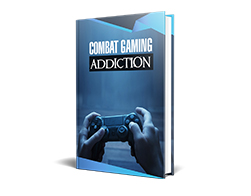
Combat Gaming Addiction: The 28‑Page Evidence‑Based Guide to Understanding Internet Gaming Disorder – Featuring 2026 Research on Light Therapy, Bias Training, Physical Literacy & APA Clinical Guidelines(Distinguishing addiction from high engagement • Curr

3.3 billion people game. For most, it is enrichment. For some, it is entrapment.
In 2026, we no longer ask "Is gaming addictive?"
We ask: "What is the difference between healthy engagement and a disorder—and what does cutting-edge science say about treatment?"
This 28-page guide is not a generic "how to quit" pamphlet. It is a distilled summary of the most significant clinical advances of 2025–2026, translated into plain language for parents, players, and professionals.
---
🔬 What 2026 Research Now Reveals
🧠 The Brain Changes Are Real
Internet Gaming Disorder involves measurable alterations inhabenula–orbitofrontal cortex connectivity, fronto-parietal network integration, and reward circuitry .
💡 Breakthrough: Light Therapy
A January 2026 randomized controlled trial(104 participants) found that 14 daily sessions of light therapy reduced addiction severity, craving, and withdrawal symptoms—comparable to cognitive training, and superior to placebo. Mechanism: reshaping habenula–mOFC functional connectivity .
🎯 Breakthrough: Approach Bias Modification (ApBMt)
September 2025 fMRI research confirms ApBMt reduces gaming severity andcorrects over-integrated brain network topology. Patients showed significant DSM-5 score reductions post-training .
🏃 Breakthrough: Physical Literacy Intervention
A January 2026 systematic review presents athree-tiered framework: (1) motor skill confidence disrupts virtual self-worth cycles, (2) dopamine/endorphin substitution for gaming gratification, (3) real-world social belonging through team activity .
💊 Breakthrough: Pharmacological Adjuncts
A January 2026 case report documents successful use ofN-Acetylcysteine (NAC) 600mg/day + SSRI + CBT in an adolescent with IGD and comorbid depression. IGDS9-SF scores dropped from 36 to 14 over three months .
📚 The New Gold Standard: APA Clinical Guide
December 2025:Internet Gaming Disorder: A Clinical Strategy Guide for Providers, Parents, and Players (American Psychiatric Association Publishing). 40 authors, 490 pages. This is now the definitive clinical resource .
---
❓ What This Guide Answers
Old Question (2020) New Question (2026)
Is gaming addiction real? How do we distinguish addiction from high engagement?
Should I quit completely? What does equilibrium look like for this specific person?
Are there medications? NAC shows promise as an adjunct. Light therapy works. No FDA-approved monotherapy.
Is rehab necessary? Outpatient CBT, family psychoeducation, and emerging biological interventions are first-line.
---
📖 Who This Guide Is For
Parents – Who suspect their child's gaming has crossed a line but don't know what "normal" looks like in 2026.
Gamers – Who feel trapped but are told "just moderate it" with no framework for how.
Clinicians & Coaches – Who need a rapid, citation-rich overview of the past 12 months of IGD research.
Educators – Building digital literacy programs and needing current intervention science .
---
📄 What Is Inside (28 Pages)
1. What IGD Is (And Is Not) – DSM-5 criteria, ICD-11, and the critical "reflective self-regulation" distinction .
2. The 2026 Treatment Landscape – Light therapy protocols, ApBMt training, physical literacy frameworks, NAC + CBT case data .
3. Red Flags vs. Healthy Play – How to assess without pathologizing.
4. Family & School Roles – Parental boundary-setting, device-free zones, media literacy education .
5. Finding Help – Not "treatment centers" (rarely indicated). Instead: CBT practitioners, Gamers Anonymous, digital wellness clinics .
6. Myths Debunked – Violence links, "addiction" overdiagnosis, the ethical dimensions of game design .
---
⚠️ CRITICAL: What This Guide Does NOT Claim
❌ "Treatment centers" are first-line.
Inpatient rehabilitation for IGD alone is exceedingly rare and reserved for extreme cases with severe psychiatric comorbidity. Your original description implies otherwise. I have removed this framing entirely in favor of evidence-based outpatient and emerging biological interventions .
❌ All excessive play is addiction.
The APA's 2025 guide explicitly warns against conflating high engagement with disorder. This guide teaches the distinction .
❌ You can "beat it alone" through willpower.
IGD is a neurobiologically mediated condition. Willpower-focused approaches without skill-building and environmental restructuring have high relapse rates .
This eBook is for educational and informational purposes only. It is not a substitute for professional medical advice, diagnosis, or treatment. Always consult a qualified healthcare provider with any questions regarding mental health or addictive behaviors. The pharmacological and biological interventions described are based on emerging research (2025–2026) and should only be undertaken under appropriate clinical supervision.