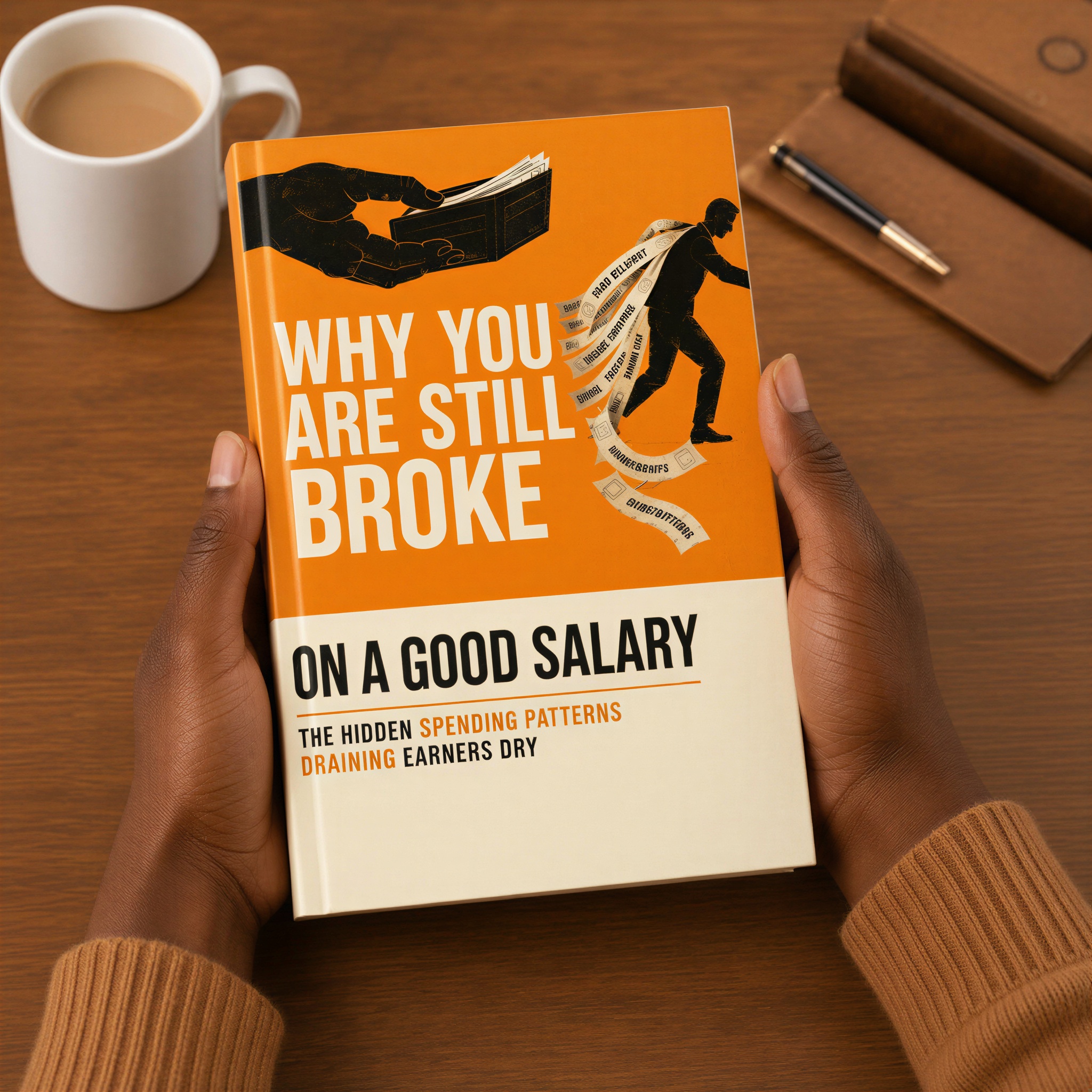
WHY YOU ARE STILL BROKE ON A GOOD SALARY — The Hidden Spending Patterns Draining Earners Dry And What To Do About It

You have been earning a good salary. The account still runs low before the month ends.
The raise was supposed to change things. For a week or two, it felt like it might. Then the new normal settled in and the financial pressure that was supposed to lift stayed exactly where it was, just wearing a slightly more expensive outfit. You earn more than you used to. You have less to show for it than the number on your payslip has ever suggested you should.
This is not a spending problem in the way most financial advice means it. You know where most of the money goes. The problem is that most of where it goes feels non-negotiable. The commitments. The family obligations. The professional expectations. The social calendar. The recurring costs that were each individually reasonable when you agreed to them and that collectively consume the month before you have made a single freely chosen decision.
The problem is structural. And this book takes it apart, one force at a time.
💸 WHY EVERY RAISE YOU HAVE RECEIVED HAS BEEN SILENTLY TAXED BEFORE YOU COULD USE IT
Lifestyle inflation does not announce itself. It arrives as a series of individually reasonable upgrades, a better apartment because the old one felt insufficient at the new income level, a car that reflects the professional environment you now operate in, restaurants that were once special occasions and are now ordinary ones. This book shows you exactly how the automatic expansion of spending matches income increases, why no income level reliably produces the surplus you expected, and the specific sequencing intervention that interrupts the cycle before the new standard locks in.
🧠 THE PORTION OF YOUR SALARY THAT IS ALREADY SPENT BEFORE YOU OPEN YOUR EYES ON PAYDAY
Pull every recurring deduction, transfer, obligation, and contribution that exits your account automatically each month. Add them up. For most mid-level earners in this market, the total is between fifty and seventy percent of net income, consumed before a single discretionary decision is made. This book walks you through the full pre-commitment audit, identifies which of those commitments are sized for a previous income level that no longer applies, and shows you the structural interventions that release cash flow permanently rather than requiring monthly discipline to maintain.
👥 THE EXPENSES YOUR SOCIAL LIFE CHARGES YOU THAT NEVER APPEAR IN ANY BUDGET
The asoebi. The office collection. The owambe you cannot miss. The family contribution that was temporary and became permanent. The professional dinners where the cheapest option still costs what you would rather not spend. These are not optional in the way personal finance textbooks assume spending is optional. This book names the social toll for what it is, a real financial drain with real social consequences for non-compliance, and gives you the specific framework for building a realistic social spending budget that does not pretend these costs do not exist.
📱 THE SUBSCRIPTION AUDIT THAT WILL SHOW YOU A NUMBER YOU ARE NOT PREPARED FOR
Pull three months of bank statements. Mark every recurring charge. Add them together. For most earners who have been in the subscription economy for more than two years, the total is not what they expect, because each individual subscription is too small to register as a problem while the collective total is significant enough to change the monthly picture entirely. This book shows you how to run this audit in under an hour, how to identify the ones that are costing more than they return, and how to address the emotional spending patterns that are filling the gaps no subscription audit will ever find.
🎯 THE PURCHASE THAT IS ACTUALLY ABOUT WHO YOU NEED TO BE SEEN AS, NOT WHAT YOU NEED TO OWN
The car that signals the professional level you have reached. The phone that positions you correctly in certain rooms. The neighborhood that carries the right address. The aspirational gym membership for the version of yourself you are becoming. This book examines the specific relationship between identity and spending, what it costs you to maintain the visible signals of professional standing, how belonging to certain social groups extracts ongoing financial participation, and how to make these purchases consciously rather than automatically, so that you know what you are actually paying for when you pay for it.
📊 WHY YOUR BUDGET KEEPS FAILING AND WHY THE PROBLEM IS THE BUDGET, NOT YOU
The standard budget framework was designed for a simpler financial life than the one a mid-level earner actually has. It assumes spending is primarily discretionary, income is stable, and the major categories can be established once and maintained with willpower. None of those assumptions describe your situation. This book shows you why restriction-based budgeting fails consistently regardless of discipline, what the priority allocation system looks like that works instead, and how to design a structure around your actual behavior rather than the aspirational version of yourself you kept trying to become during every previous budgeting attempt.
💡 THE CASH FLOW RESTRUCTURING THAT CHANGES THE MONTH BEFORE IT BEGINS
Cash flow restructuring is not budgeting. It is sequencing. It asks not what you spend money on but in what order money moves and who gets first claim on it. This book gives you the three-pool separation system that removes most monthly financial decisions from the realm of willpower entirely, the irregular expense buffer that means a car repair or medical bill never wrecks a month again, and the specific automated transfer sequence that ensures savings move before the available-money mindset has had time to form.
📈 WHAT THE EARNERS WHO ARE BUILDING WEALTH ARE DOING DIFFERENTLY ON THE SAME SALARY
The wealth gap between earners who build financial security and earners who do not is not primarily a gap in income. It is a gap in what happens between income arriving and money accumulating. Two earners with identical salaries in the same city can arrive at completely different financial positions over a decade because one understood the structural forces draining their income and built a system that worked around them. This book tells you exactly what that system looks like and why starting it at your current income level produces more than waiting for the next one.
💡 WHAT MAKES THIS BOOK DIFFERENT
Most money books for African earners address income as the variable that needs to change. This one addresses what happens between income arriving and money disappearing. It identifies eight specific structural and psychological forces that standard financial advice never names because it was written for a different person in a different market. The social toll of operating in a family and professional network with financial expectations is not covered in Western personal finance literature. The pre-commitment architecture that consumes fifty to seventy percent of a Nigerian professional's income before discretion acts is not covered either. This book was written for the person those books forgot.
✅ BENEFITS YOU WILL NOTICE
📌 A clear picture of why every raise has been absorbed and what to do differently the next time income increases
📌 A complete map of your pre-committed income and which commitments are sized for a version of your life that no longer exists
📌 A realistic social spending budget that accounts for the actual financial expectations of your professional and family environment
📌 The subscription audit result and a clear decision about what stays and what stops
📌 A priority allocation system that works without the monthly discipline that kept failing
📌 An honest answer to what your spending behavior demonstrates you are actually optimizing for, and whether that is what you intend
📌 Structural changes that reduce financial pressure permanently rather than requiring willpower to maintain month after month
I wrote this book for the earner who has done everything the standard advice suggested and still cannot explain the account at the end of the month. The problem was never your discipline. It was that nobody ever showed you the specific forces your salary was running into before you could direct it. — Youbeoga Innovations
👤 WHO THIS BOOK IS FOR
✅ For the professional in Lagos, Nairobi, or Accra who earns what most people around them would call a good salary and still feels financially tight in ways that do not make sense on paper
✅ For the earner whose income has grown steadily over several years while their financial position has stayed essentially the same
✅ For the person who has tried budgeting more than once, watched it hold for two weeks, and concluded that budgeting simply does not work for their kind of life
✅ For the mid-level earner carrying family financial obligations alongside personal financial goals and feeling like one is always winning at the expense of the other
✅ For the professional who keeps telling themselves that the next salary level will be the one that finally creates room, and who suspects, privately, that it will not
✅ For anyone who has stared at a bank account that should look different and wanted an honest explanation for why it does not
🔄 FROM WHERE YOU ARE TO WHERE YOU ARE GOING
From earning well and keeping almost nothing to understanding exactly what has been happening between income arriving and money disappearing
From a month that runs out in ways that surprise you to a month that is structurally designed before it begins
From relying on discipline that keeps failing to building structure that works without it
From spending to confirm who you need to be seen as to spending with full awareness of what you are actually paying for
From waiting for the next income level to fix things to taking back the current income level before the next one arrives
👉🏽 Click "I Need A Copy" and find out exactly what has been happening to the salary that was supposed to change things.