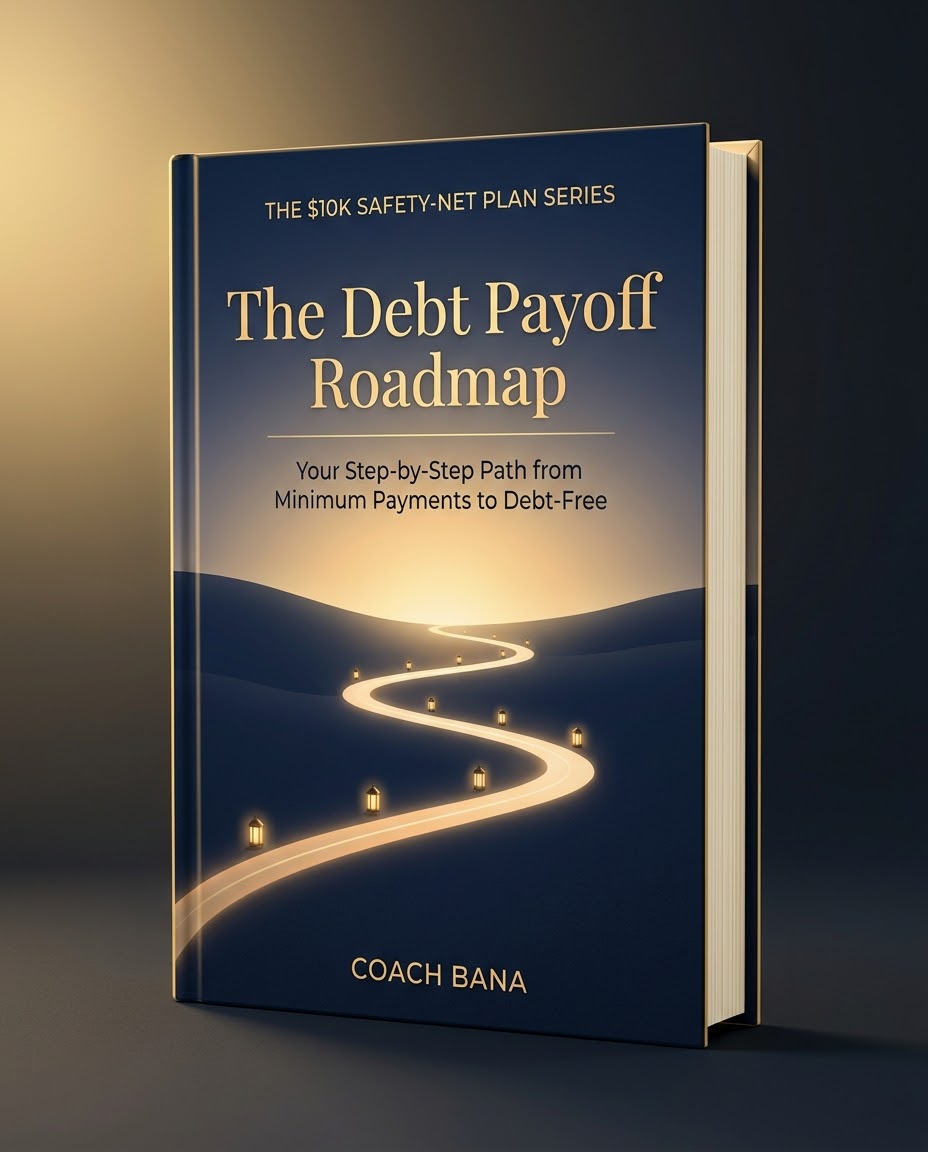
The Dept-payoff Roadmap
Your step-by-step path from minimum payments to debt-free, without draining your safety net.
You make a payment, and the balance barely moves. You pay again next month, and it feels like running on a treadmill that keeps speeding up.
That's not because you're bad with money. It's because you've been fighting debt without a map.
The Debt Payoff Roadmap is a step-by-step PDF guide that shows you exactly how to pay off credit cards and other debt faster, while keeping your Safety Net in place so new emergencies don't send you backward.
WHAT YOU'LL LEARN
✓ How to see every dollar you owe in one place, and check your credit reports for free
✓ How to choose the payoff method that fits you: Snowball, Avalanche, or a hybrid of both
✓ Where to find extra money for faster payoff, without stopping your savings
✓ How to lower your interest with rate requests, balance transfers, consolidation loans, or nonprofit credit counseling
✓ Which "debt relief" offers to avoid, and your rights when dealing with debt collectors
✓ How to stay on track through setbacks and what to do the day you make your final payment
WHAT'S INSIDE
• 5 chapters plus an introduction, written in plain, judgment-free language
• 18 ready-to-use worksheets, trackers, and templates, including a Debt Inventory, Payoff Order Worksheet, Debt-Free Countdown, Monthly Payoff Tracker, and a Debt Validation Letter template
• Real payoff examples showing how much time and interest the right plan can save
BUILT TO WORK WITH THE $10K SAFETY-NET PLAN
This guide follows the same simple system: protect a starter safety net of at least $1,000, then put your extra money toward debt. It works on its own, and works even better alongside The $10K Safety-Net Plan.
HOW YOU'LL GET IT
Instant access after checkout. Read on your phone, tablet, or computer, or print the worksheets.
QUESTIONS?
Email [email protected]. A real person reads every message.
This guide is for educational purposes and is not financial, legal, or tax advice. Individual results depend on your balances, interest rates, lender terms, and consistency.