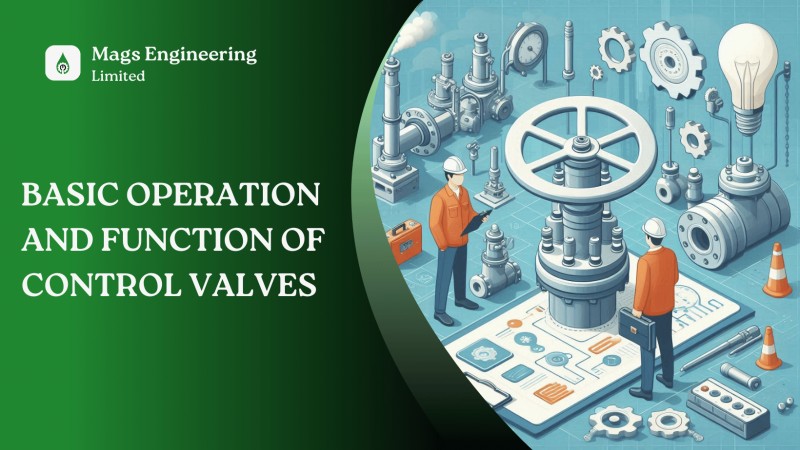
Basic Operation & Function of Control Valves
Trainer: Engr. Majid
About this Course
Control valves are a critical component in industrial processes, regulating the flow of fluids (liquids, gases, or slurries) through a system. Their primary function is to adjust the flow rate based on input from a control system, which can be linked to various process parameters such as pressure, temperature, or level. Control valves are widely used in industries like oil and gas, chemical processing, water treatment, and power generation to ensure optimal process control, system efficiency, and safety.
This Basic Operation & Function of Control Valves Course provides a strong foundation in control valve technology and its applications across various industries. It helps participants understand the critical role of control valves in maintaining operational efficiency and safety within industrial processes.
Duration
2 Days
Methodology
- Theoretical
- Prerequisite
- Basic Knowledge of Fluid Mechanics.
- Basic Understanding of Instrumentation and Control
Learning outcomes
- Understand the terminology related to control valves and their applications across various industries.
- Gain knowledge of the basic designs of control valves and their suitability for different process conditions.
- Learn how to evaluate characterization and trim design for optimizing valve performance in various applications.
- Recognize and address technical considerations related to control valves, including material selection and installation requirements.
- Comprehend the force-balance principle and how it relates to actuator functionality and valve operation.
- Understand the basic designs of actuators and how they interact with control valves to regulate flow accurately.
- Explore the concept of control valve unit action and its impact on system response and flow regulation.
- Master the concept of actuator benchset range and its importance in valve calibration for optimal performance.
- Gain a solid understanding of the principles behind valve positioners, including how they influence valve control and accuracy.
- Learn the mechanics of control loop action, how it interacts with control valves, and its effect on process stability.
- Understand control valve packing designs, their role in preventing leaks, and how they maintain valve integrity.
- Gain insight into seat leakage considerations, and learn techniques for minimizing or preventing leakage in control valve systems.
Course outline
Module 1: Terminology
Module 2: Control Valve Basic Designs
Module 3: Characterization and Trim Design
Module 4: Control Valve Technical Considerations
Module 5: Force-Balance Principle
Module 6: Actuator Basic Designs
Module 7: Control Valve Unit Action
Module 8: Actuator Benchset Range
Module 9: Valve Positioner Basics
Module 10: Control Loop Action
Module 11: Control Valve Packing Designs
Module 12: Seat Leakage
Module 13: Case Studies
Assessment
Online Written Exam
Course Delivery Formats
- Classroom-based training
- Online courses
- In-house workshops
- On-the-job training
Cost
₦60,000 / $50