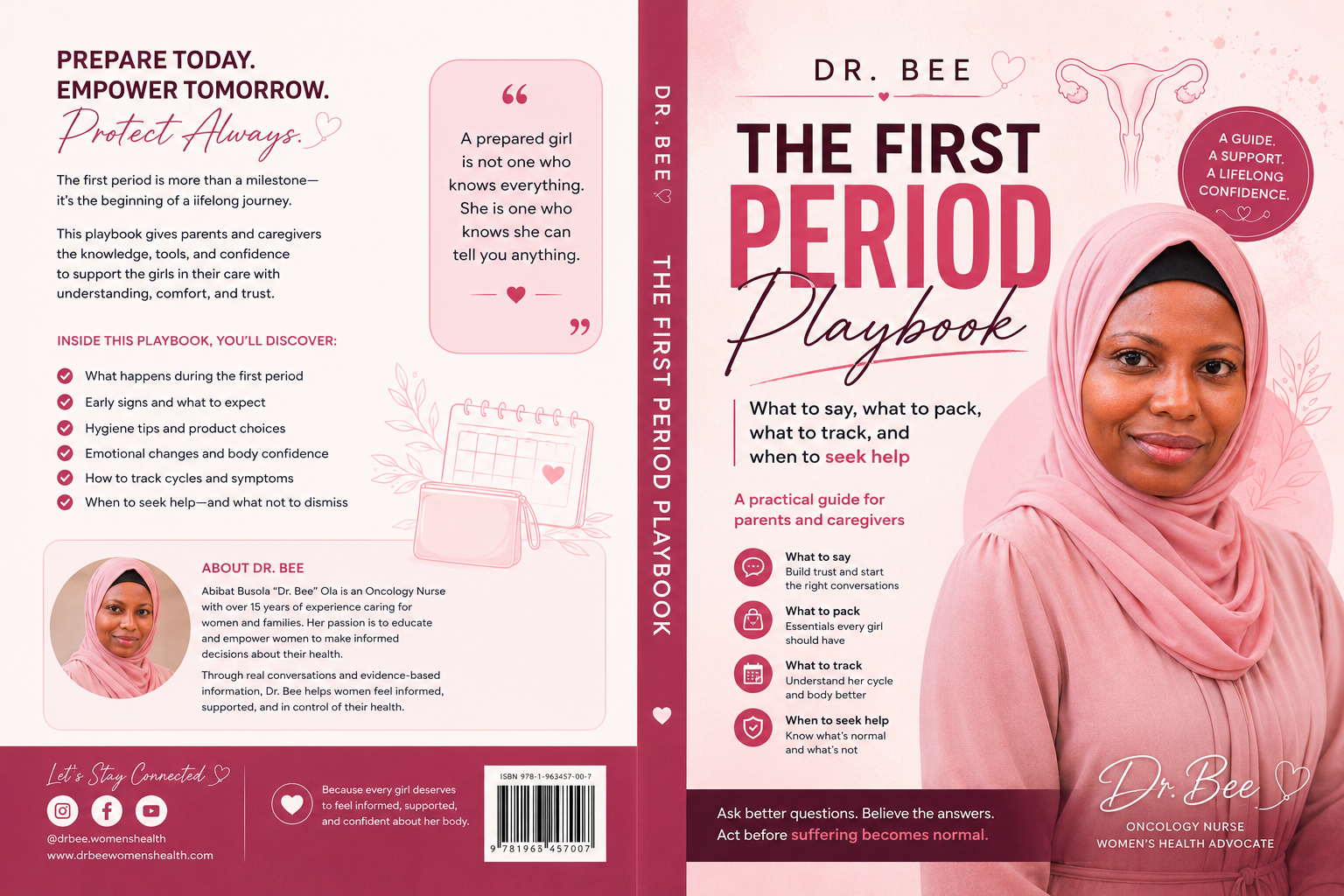
Dr. Bee - The First Period Play Book
Her first period shouldn’t be the first time you talk about periods.
Give her the information she needs before the day comes.
Dr. Bee’s First Period Playbook helps parents and caregivers prepare girls for their first period without fear, shame or awkward guessing.
GET THE FIRST PERIOD PLAYBOOK
Imagine her period starts at school.
She looks down and sees blood.
Does she know what’s happening?
Does she know what to do?
Does she have what she needs in her bag?
That moment can look very different when you’ve already had the conversation.
That’s why I made this guide.
HELP ME PREPARE HER
You don’t need to wait until her period starts.
If she’s approaching puberty, now is the time to start talking.
Not one huge, awkward conversation.
Just enough information that when her period comes, it isn’t a complete surprise.
The First Period Playbook shows you what she needs to know and helps you figure out what to say.
GET THE PLAYBOOK
Here’s what you’ll learn
- How to know her first period may be getting closer
Learn the common changes that can happen as puberty progresses so you’re not completely caught off guard.
- What she needs to know before she sees blood
What a period is.
What she may experience.
And most importantly, what she should do when it happens.
How to prepare her first period kit
Know what to put in it so she has what she needs at home, at school or away from you.
What’s normal — and what deserves medical attention
Periods can vary, especially in the first few years.
The guide helps you understand common symptoms and recognise when it may be time to speak with a healthcare professional.
YES, I WANT THE PLAYBOOK
“But I don’t know how to start this conversation.”
Start small.
You don’t need a perfect speech.
And you definitely don’t need to sit her down one day and explain everything about menstruation at once.
Use the guide to help you start conversations naturally and answer the questions that come afterward.
Because the goal isn’t for you to say everything perfectly.
The goal is for her to know she can come to you.
HELP ME START THE CONVERSATION
This is for the parent who keeps thinking…
Is she old enough for us to talk about this?
What exactly should I tell her?
What if she asks me something I don’t know how to answer?
Or maybe you’ve already noticed signs of puberty and realised:
We need to have this conversation soon.
This guide gives you somewhere to start.
GET INSTANT ACCESS
What you’re getting
Dr. Bee’s First Period Playbook
A practical digital guide for preparing girls for their first menstrual period.
Inside you’ll learn how to prepare for the first period before it happens, put together a period kit and talk about menstruation without making it frightening or shameful.
You’ll also learn about common symptoms and when something may deserve medical attention.
YES, I WANT THE FIRST PERIOD PLAYBOOK
One thing I want your daughter to know before her first period:
Blood does not mean something is wrong with her.
Imagine how different that first moment can feel when she already knows what a period is.
She knows where the pads are.
She knows what to do.
And she knows exactly who she can talk to.