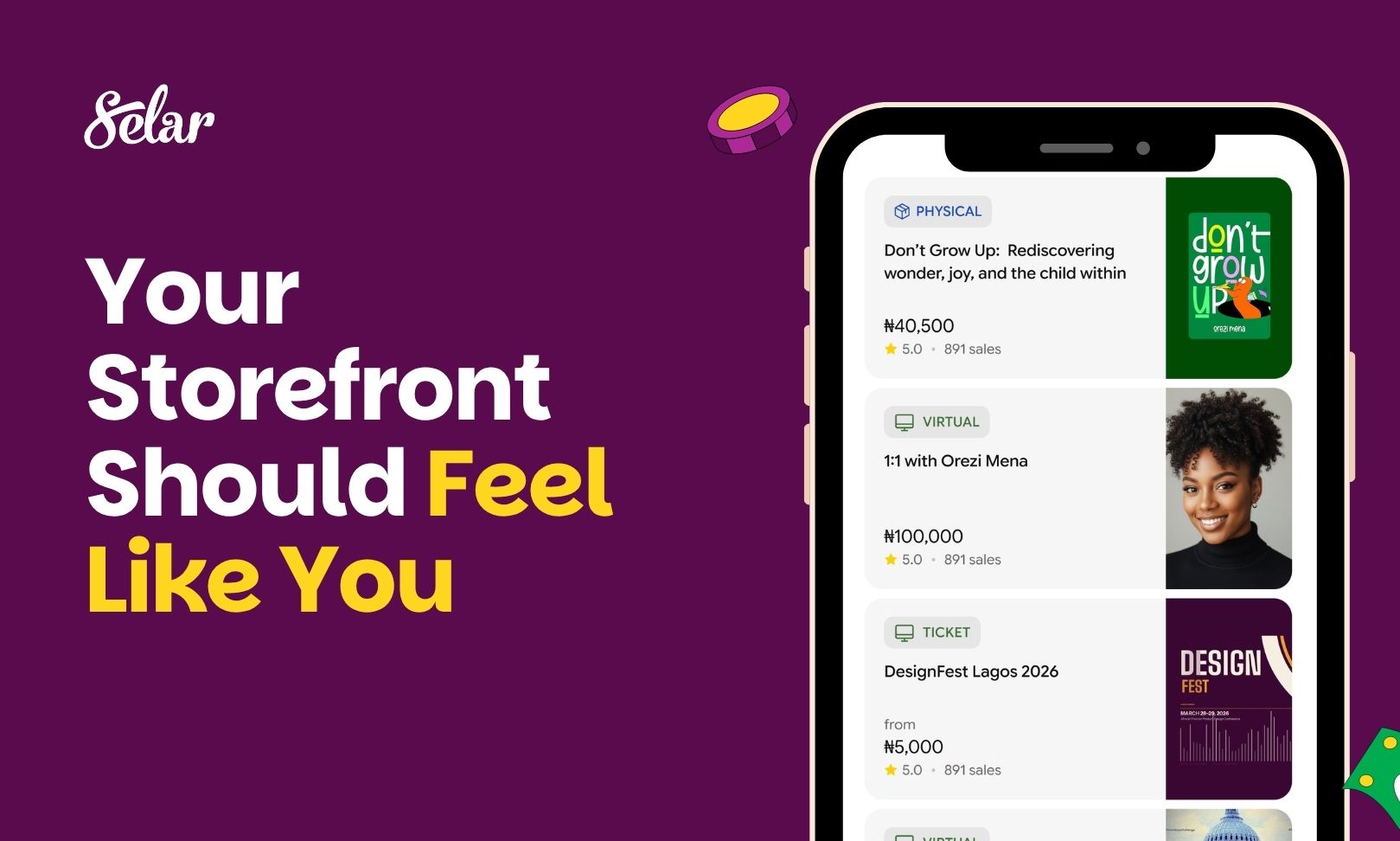

Your storefront is often the first place people experience your brand. It is where they discover what you sell, get a sense of who you are, and decide whether they want to buy from you. So why should every creator have to start from the same place?
A teacher, a fashion creator, a coach, an author, a beauty entrepreneur, and an artist may all sell on Selar, but they don’t build their brands the same way. They don’t speak to their audiences the same way, and they don’t sell in the same way. Their storefronts shouldn’t have to look the same either.
That’s the thinking behind Selar Storefronts, a new collection of storefront styles designed around the different ways creators build, express, and sell their brands.
Moving beyond one storefront
Until now, the storefront experience has focused primarily on the functional parts of selling. You add your products, set your prices, publish your page, and start selling. Those things are important, but they’re only part of the experience.
How you present your products matters too.
A storefront can feel minimal or expressive, premium or playful, bold or understated. It can put your expertise at the centre or give your visual identity more room to shine. The storefront becomes part of the impression someone gets when they encounter your brand for the first time.
That’s why we’re giving creators more ways to shape that experience.
With Selar Storefronts, you can choose from different styles, each with its own structure, visual language, and personality. They’re not simply different colours applied to the same page. Each one is designed around a different way of showing up.
Seven storefront personalities
The first collection includes seven styles, each built with a particular feeling in mind.
Tuntun means “fresh” in Yoruba. It’s our clean, balanced, flexible option and the default storefront for creators who want a straightforward way to present their products without committing to a strong visual direction.
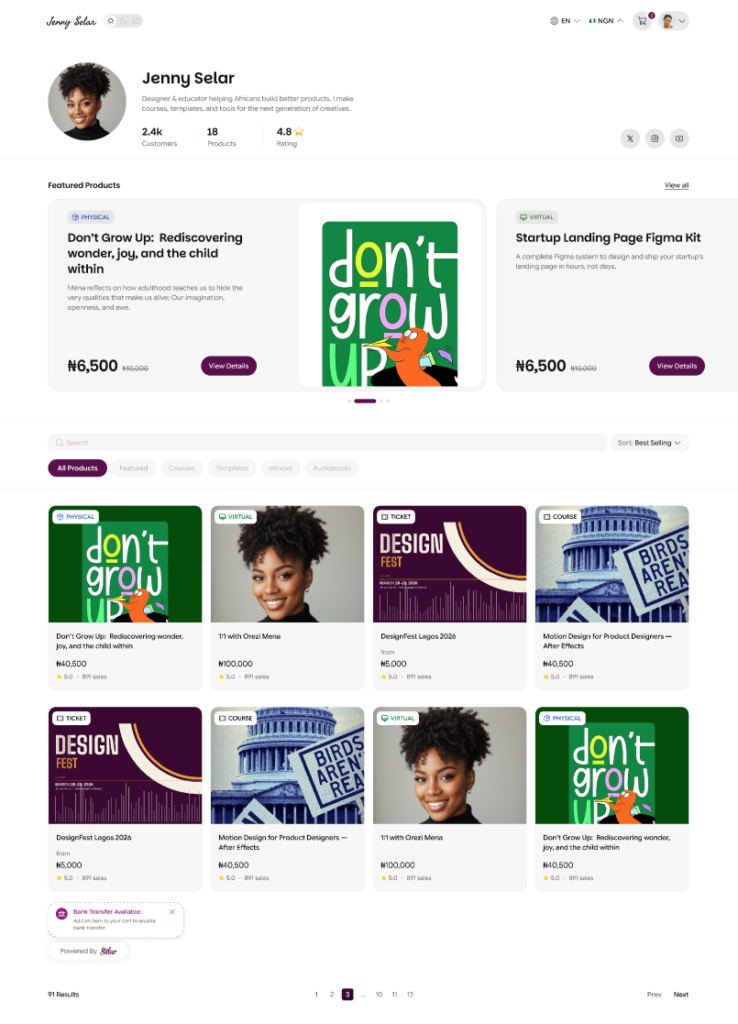
Asana is clean and minimal. It keeps the experience focused and distraction-free, putting your products at the centre. It’s designed for creators who prefer simplicity and want the design to stay out of the way.
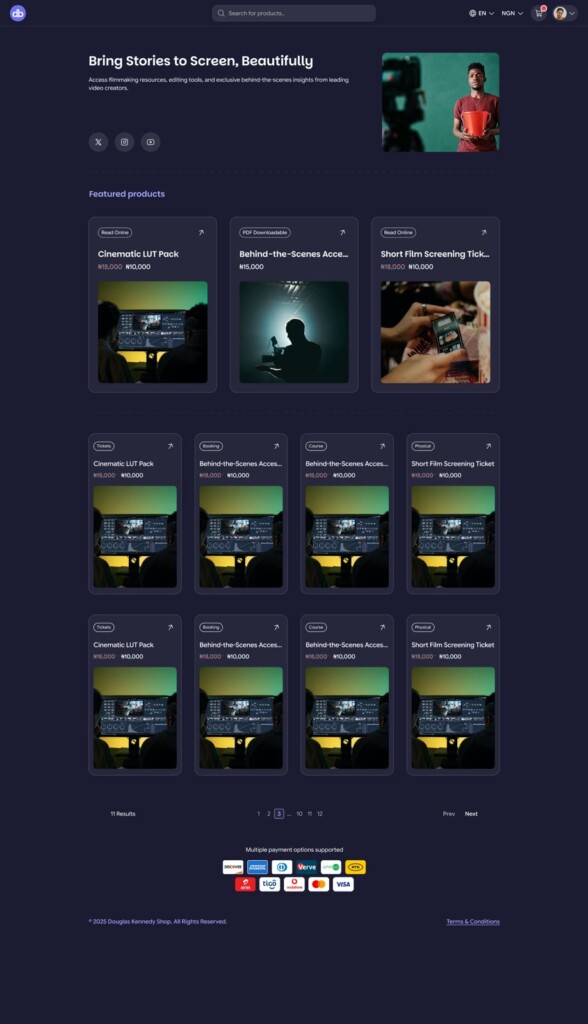
Ogbaragba brings a more refined and premium feel. It’s designed for creators who want a stronger sense of sophistication and brand presence, particularly when the products themselves are positioned at a higher value.
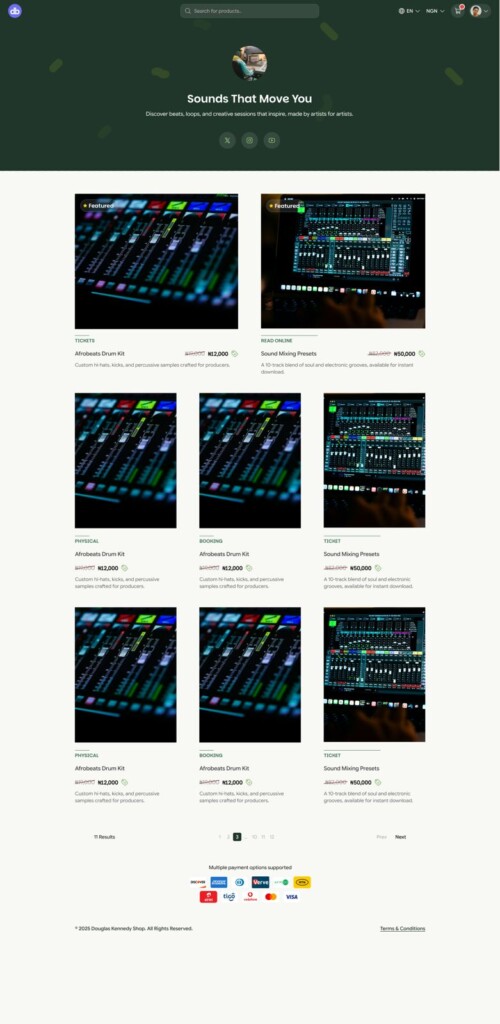
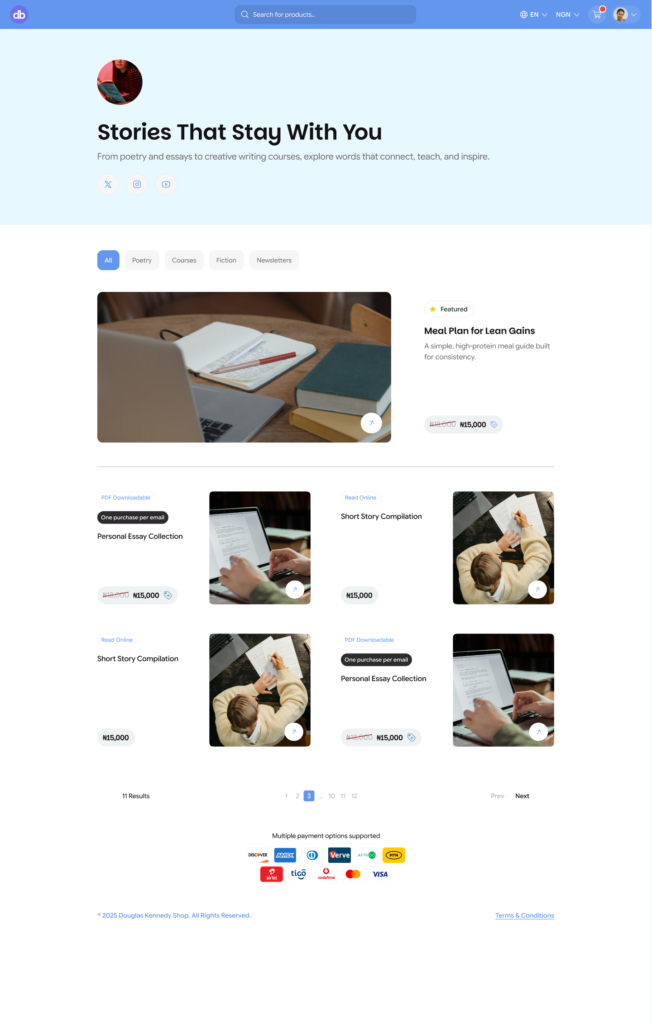
Onye Nkuzi, meaning “teacher” in Igbo, is built around knowledge-driven creators. Its structure makes it a natural fit for courses, ebooks, coaching, educational resources, and creators whose expertise is at the heart of what they sell.
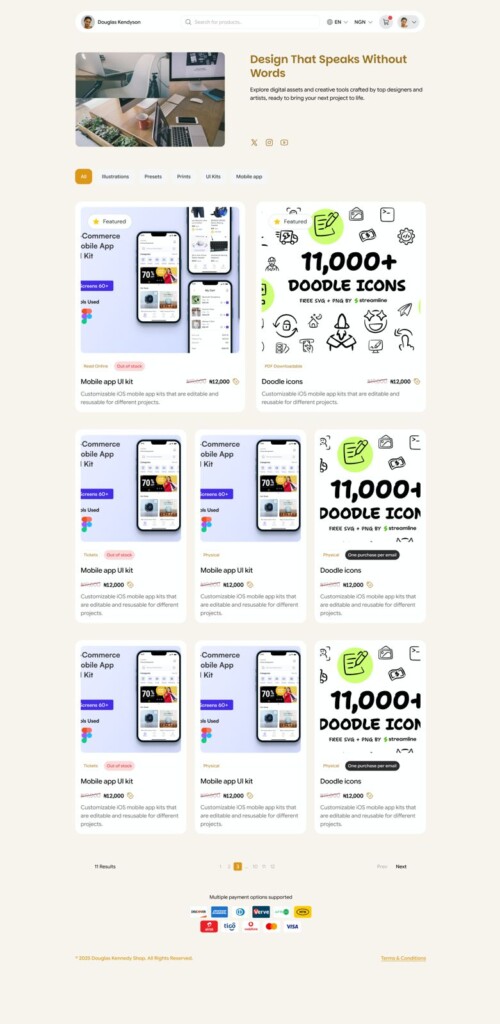
Uyai, meaning “beauty” in Ibibio, is our more visual and aesthetic storefront. It gives imagery and lifestyle more room to take centre stage, making it a natural fit for beauty, fashion, photography, and personal brands.
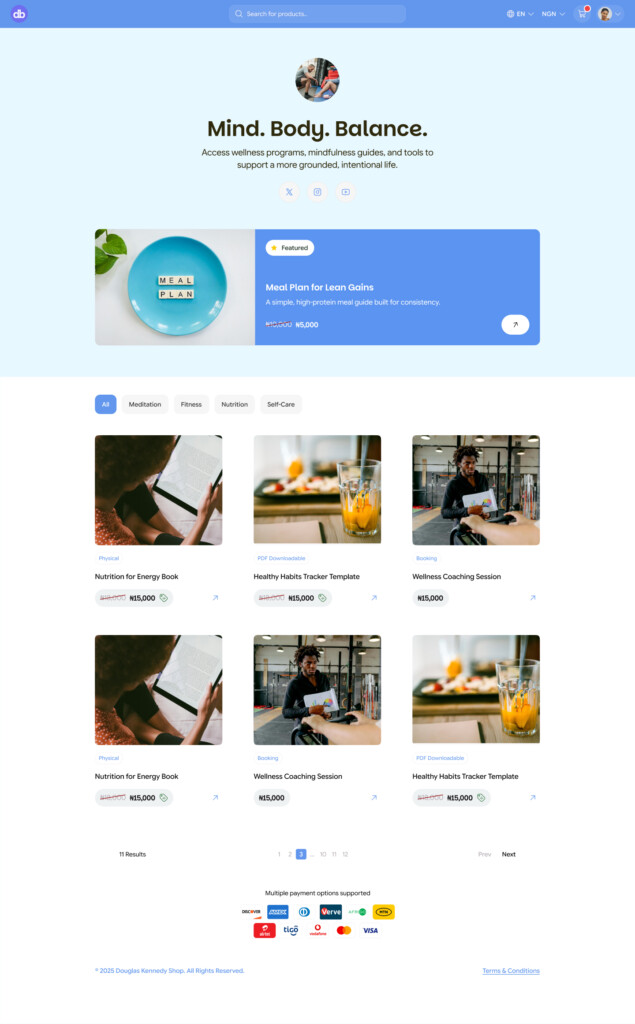
Kyau takes a softer, more expressive approach. It’s designed for creators whose brands are built around taste, art, identity, and emotion, where the feeling surrounding a product can be just as important as the product itself.
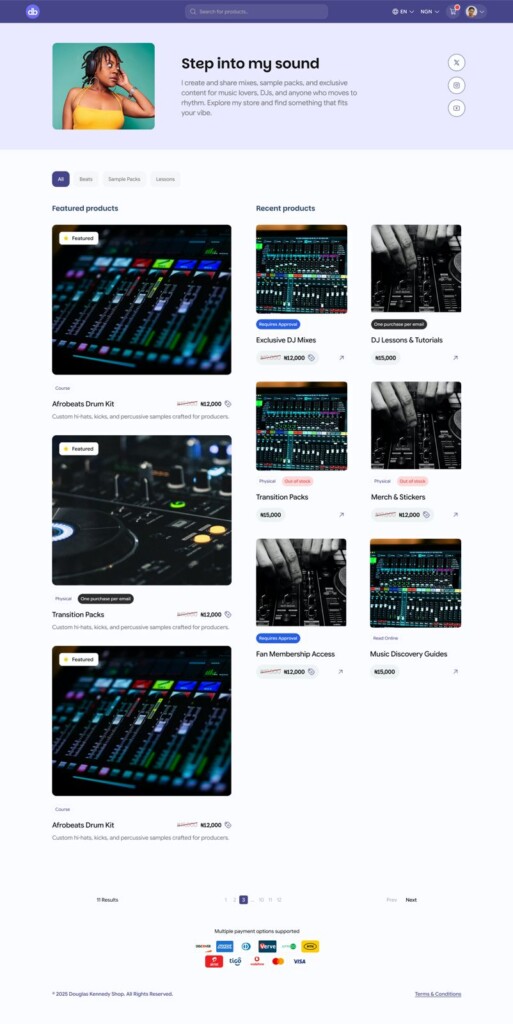
And then there’s Otutuoma, a bold, high-impact storefront designed for moments when you want to get attention. It’s particularly suited to launches, campaigns, promotions, and creators who want a stronger visual presence.
Why the names matter
The names are not random, and they’re not simply there to make the templates feel different.
We wanted Storefronts to feel at home on Selar.
Creators across Africa don’t all express themselves, build brands, or communicate value in the same way. There is no single African aesthetic, just as there is no single type of creator. There are different languages, cultures, visual styles, and ways of telling stories.
So rather than creating another collection of generic template names, we drew inspiration from different African languages and cultural contexts. Each name represents a quality, feeling, or personality that helped shape the storefront behind it.
It’s a small part of a bigger idea: the tools creators use should give them room to express who they are, rather than asking everyone to fit into the same mould.
A storefront that fits the way you sell
You might be building an education business and want your expertise to lead. You might be launching a beauty brand where imagery is everything. You might be building a premium personal brand, preparing for a major campaign, or simply looking for a clean place to sell your products.
Whatever your brand looks like, your storefront should feel like an extension of it.
That’s what we’re building with Selar Storefronts: more choice, more personality, and more room for creators to make their presence their own.
Because your products are yours, your brand is yours, and your storefront should feel like you.