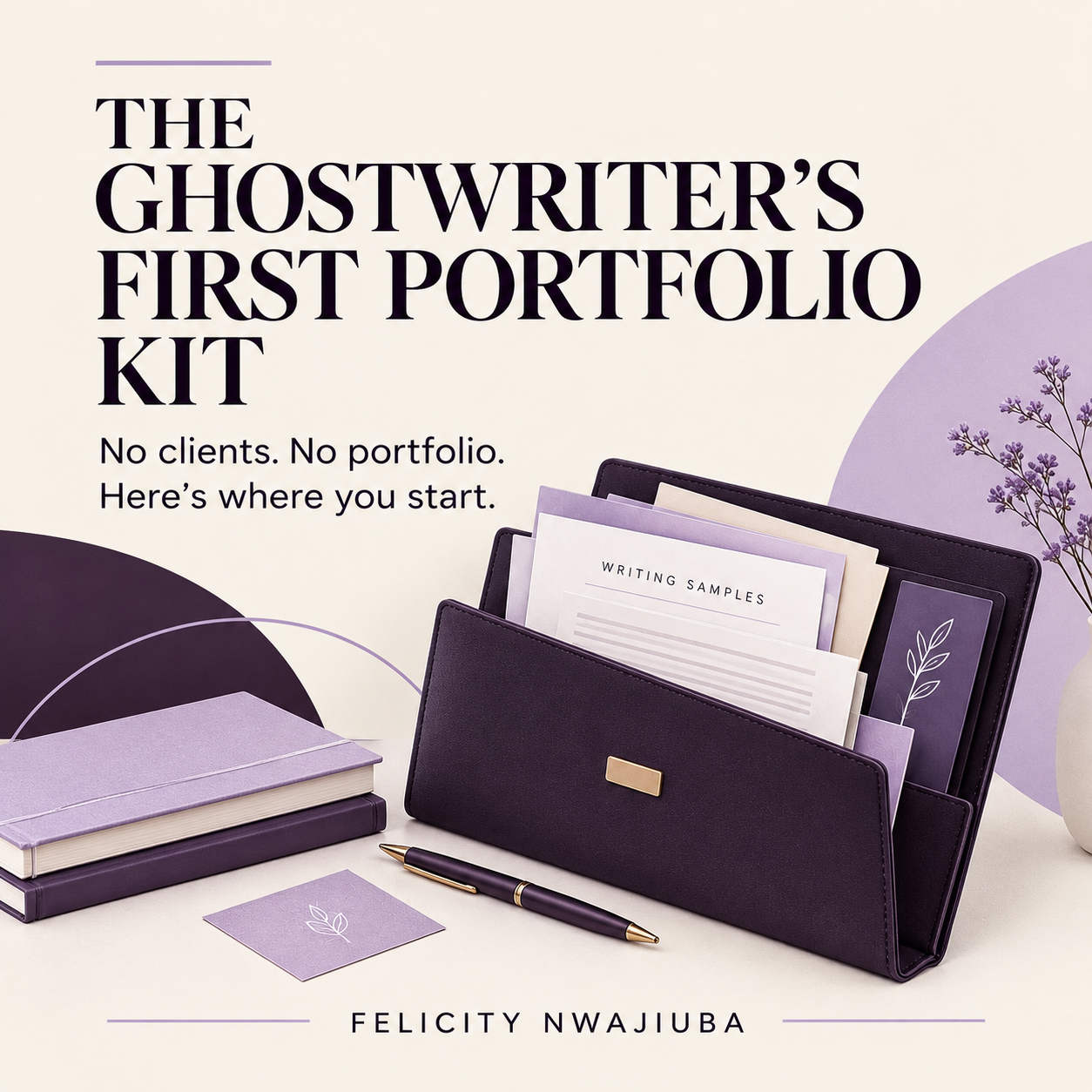
The Ghostwriter's First Portfolio Kit
You want to become a ghostwriter. But there's one problem.
You have the interest. You enjoy writing. Perhaps you've written articles, helped people put their thoughts into words or spent hours practising your craft.
You've even started looking at ghostwriting opportunities.
Then you come across a question that seems to appear everywhere:
Do you have a portfolio?
And suddenly, you don't know what to say.
You understand that clients want to see your work before trusting you with theirs. You know that a portfolio can help you demonstrate your writing ability, style and versatility.
But how do you create one when nobody has hired you yet?
What exactly are you supposed to write?
Should you create blog articles? LinkedIn posts? Thought leadership pieces? Book chapters?
How do you know whether your samples are good enough?
And once you've written something, how do you arrange everything into a portfolio that looks professional rather than like a collection of random documents?
You might have even considered giving up on the idea until you get your first writing opportunity.
But here's something worth understanding:
You don't need a client to start demonstrating your writing ability.
You can create practice samples based on realistic writing briefs, develop your skills and use those samples to demonstrate what you can do.
You need a starting point. That's exactly what this kit provides.
Meet The Ghostwriter's First Portfolio Kit
A practical starting point for aspiring ghostwriters who want to stop overthinking their first portfolio and actually build one.
This isn't another collection of motivational advice telling you to start writing.
It's a guided resource designed to help you understand what to write, practise creating different types of content and present your work professionally.
Inside, you'll find three guided writing briefs, writing examples and portfolio guidance to help you move from having no portfolio to having something tangible you can show potential clients.
Whether you're completely new to ghostwriting or you've been writing for a while but haven't organised your work into a professional portfolio, this kit gives you a clearer way forward.
You bring your willingness to write. This kit helps you know where to begin.
What you'll find inside
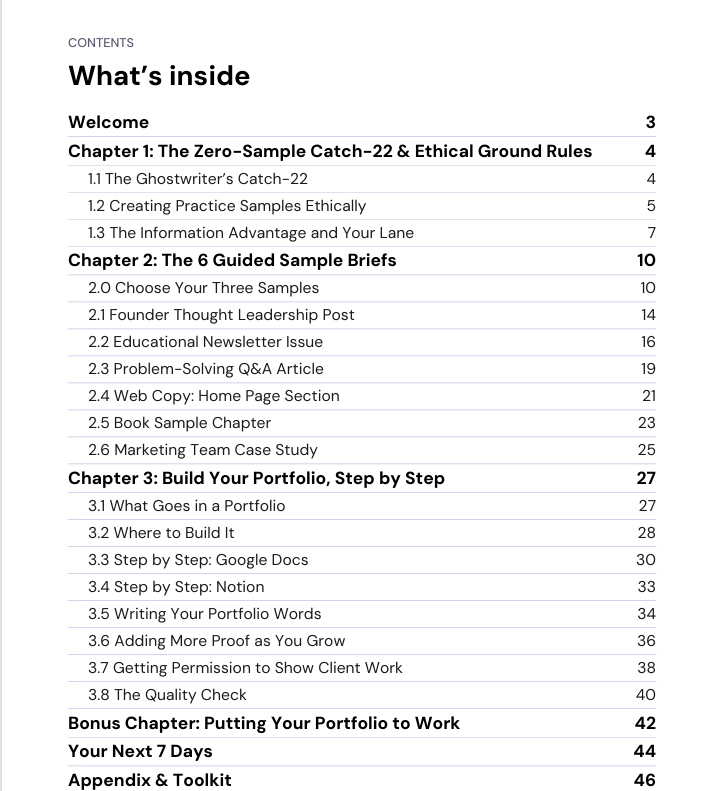
Here's what you're getting when you purchase the kit:
1. Six Guided Writing Briefs
Not sure what to write for your portfolio?
You'll get six guided writing briefs to help you practise creating writing samples without needing an actual client or project.
Instead of staring at a blank page wondering what to create, you'll have a direction to follow.
Use these briefs to practise your writing, explore different content formats and begin building samples that demonstrate your abilities.
2. Writing Examples
Sometimes, knowing what to write isn't enough. You also need to understand what a finished sample can look like.
The kit includes writing examples to give you a practical reference as you work through your own samples.
You'll have something to learn from as you develop your writing and work towards creating pieces you're comfortable presenting professionally.
3. Portfolio Guide and Template
You've created your samples. Now what?
This guide and template will help you understand how to bring your work together into a portfolio.
You'll have a starting structure for organising and presenting your samples rather than trying to figure out the entire process yourself.
4. Portfolio Presentation Checklist
Before sharing your portfolio with potential clients, there are things you should check.
The presentation checklist will help you review your portfolio, pay attention to important details and ensure your work is organised and ready to be presented.
It's a useful final step between creating your samples and sharing your portfolio.
Here's what this kit will help you do
By working through the kit, you will:
1. Know exactly what to write for your first portfolio.
Stop wondering what kind of samples you need. Work with guided briefs that give your writing practice direction.
2. Create professional writing samples without waiting for clients.
You can demonstrate your writing ability through practice samples instead of waiting for someone to give you your first paid assignment.
3. Build a portfolio you can confidently share with potential clients.
Bring your samples together in an organised, professional format that makes it easier for prospective clients to understand your capabilities.
4. Understand how to present your writing.
Learn to think beyond simply producing good content. Your portfolio should make your work easy to explore and understand.
5. Take a practical step towards your ghostwriting career.
Move from thinking about becoming a ghostwriter to doing something tangible that supports your professional development.
Who is this kit for?
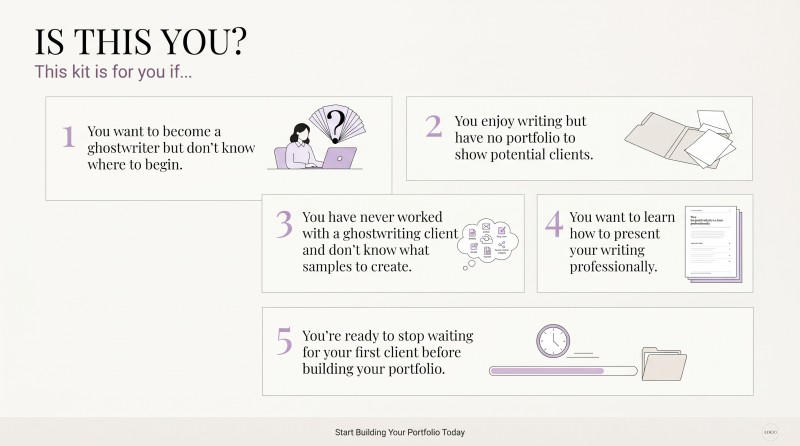
This kit is for you if:
- You're interested in becoming a ghostwriter but don't know how to get started.
- You're a beginner with little or no professional writing experience.
- You have writing skills but no portfolio to show potential clients.
- You've been putting off creating your portfolio because you don't know what samples to include.
- You want to practise different types of writing before approaching clients.
- You need guidance on organising and presenting your writing professionally.
You don't need to have worked with clients before to use this kit.
However, you should be willing to write, practise and put what you learn into action.
Who might not need this kit?
If you're already an experienced ghostwriter with an established portfolio and a collection of professional client projects, this resource may be too basic for your current needs.
It's specifically designed to help beginners get started.
A little about the person behind this kit
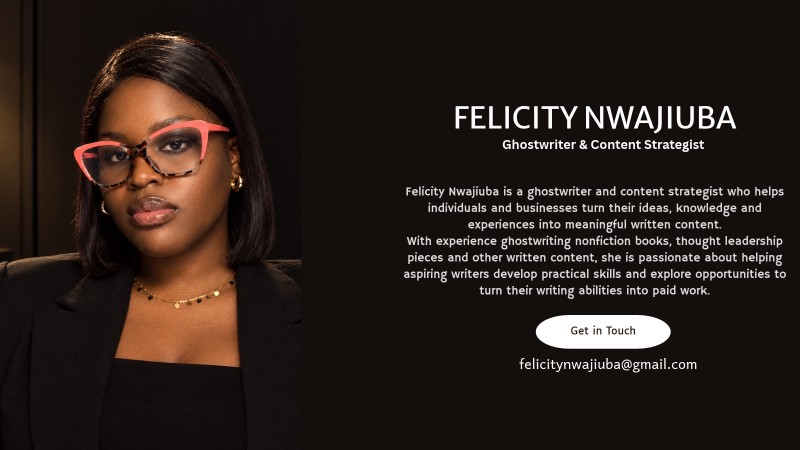
Hello, I'm Felicity Nwajiuba.
I'm a ghostwriter and content strategist with experience ghostwriting thought leadership pieces and nonfiction books for clients.
Through my work, I've learned that writing is only one part of presenting yourself as a professional writer.
You also need to know how to demonstrate your abilities, communicate the value of your work and give potential clients something they can use to assess your writing.
I created this kit because I understand how frustrating it can be to have the skills and interest but struggle to prove what you can do simply because you don't have a portfolio or previous client experience.
I don't want aspiring ghostwriters to spend months waiting for an opportunity before taking the first practical step towards building their careers.
You can start somewhere.
And I want this kit to be that starting point.
Your investment
You don't need an expensive course or months of figuring everything out before you can start building your portfolio.
You need a practical resource that helps you take the next step.
Frequently asked questions
1. Do I need previous ghostwriting experience to use this kit?
No. The kit is designed for aspiring and beginner ghostwriters. You don't need previous client experience to get started.
2. What if I have never written for a client before?
That's perfectly fine. The guided writing briefs will help you practise creating samples without needing an actual client assignment.
3. Will this kit help me get clients?
The kit helps you create writing samples and organise them into a portfolio you can share with potential clients. While having a professional portfolio can strengthen your presentation when approaching clients, getting hired also depends on factors such as your writing ability, pitching, communication and the opportunities you pursue.
4. Do I need to be an excellent writer already?
You should have a genuine interest in writing and be willing to practise. This kit provides guidance and examples, but developing your writing skills will still require effort and consistency.
5. What types of writing will I practise?
You'll work with three guided writing briefs and writing examples designed to help you create portfolio samples. The briefs will give you a direction for your practice.
6. How will I receive the kit?
It's a digital product. Once your payment is completed, you'll receive access to the downloadable resource through the purchase platform.
7. Can I work through the kit at my own pace?
Yes. You can work through the materials at a pace that suits you, revisit the guidance and spend time developing your samples.
8. Is this suitable for someone who already has a portfolio?
If you already have an established professional portfolio, you may not need this beginner-focused resource. It's most useful for people creating their first portfolio.
You don't have to keep waiting for your first opportunity.
You can keep searching for ghostwriting jobs, reading about how to become a ghostwriter and wondering what clients expect to see.
Or you can start building something that helps demonstrate what you're capable of.
Your first portfolio doesn't have to be perfect.
It doesn't have to contain years of client experience.
It simply needs to be a genuine representation of your writing ability and a starting point you can build on as you grow.
You don't have to wait until someone gives you a chance before you begin taking yourself seriously as a writer.
Start with what you have. Build what you need. Put your writing out there.